Showing posts with label invention. Show all posts

Thursday, October 02, 2025

The Invention and Evolution of Margarine

The invention of margarine dates back to 1869, when French chemist Hippolyte Mège-Mouriès created it in response to a challenge issued by Emperor Napoleon III. Napoleon III sought a cheaper and more stable substitute for butter to provide for the armed forces and the lower classes, as butter was both expensive and perishable. Mège-Mouriès, drawing on his background in chemistry and food science, developed a product made from beef tallow. This substance, a form of animal fat, was readily available and cost-effective, making it an ideal base for the new butter alternative. He named his creation “oleomargarine,” a term derived from "oleum," meaning oil, and "margarites," the Greek word for pearl, reflecting the product’s pearly appearance. The name was later shortened to margarine, which has since become a staple in households around the world.

After patenting his invention, Mège-Mouriès attempted to commercialize margarine in France, but he faced significant challenges. The French market was slow to embrace the new product, partly due to cultural preferences for traditional butter and partly because of the dairy industry's resistance to a competitor. In 1871, facing limited success in his home country, Mège-Mouriès sold the patent to the Dutch company Jurgens. This company, which would later merge into Unilever, saw the potential in margarine and began to develop and market it more aggressively. Around the same time, a German pharmacist named Benedict Klein founded the first margarine factory in Germany, producing brands like Overstolz and Botteram, further establishing margarine’s presence in Europe.

Margarine’s composition evolved significantly over time. While it was initially made from animal fats, by World War I, manufacturers began incorporating vegetable oils, such as cottonseed and soybean oils, into the recipe. This shift not only improved the product’s texture and flavor but also made it more accessible to a broader audience, especially during periods of butter scarcity. The Great Depression and World War II, in particular, saw a surge in margarine consumption as these economic and global challenges made butter more expensive and harder to come by.

Despite its growing popularity, margarine faced significant opposition from the dairy industry, leading to a series of legal battles and stringent regulations. In the United States, some states enacted laws requiring margarine to be dyed pink, making it less appealing and ensuring that it could not be easily confused with butter. These laws were part of a broader effort by the dairy lobby to protect the butter market. However, as time passed and consumer preferences shifted, margarine became more widely accepted. Its affordability, longer shelf life, and versatility in cooking and baking have ensured its place as a popular butter substitute in many households today.
The Invention and Evolution of Margarine

Thursday, February 20, 2025

Denis Papin and the Evolution of the Pressure Cooker

Denis Papin's revolutionary introduction of the pressure cooker in 1689 was a significant milestone in culinary technology. A French physicist and mathematician, Papin's exploration into pressure cooking began with his air-pump experiments alongside the esteemed Dutch physicist Christiaan Huygens. Later, during his time in London in 1675, he collaborated with English physicist Robert Boyle, further expanding his knowledge of gases and pressure dynamics.

Commonly known as the 'steam digester,' Papin's first pressure cooker, affectionately called the 'bone digester,' had applications beyond cooking. Engineered to enhance food preparation through steam pressure, it could soften even the hardest bones, releasing essential nutrients and improving digestibility. A crucial innovation in Papin's design was the addition of a pressure-relief valve with a small piston secured by a weight. This safety feature ensured that excess steam was released when internal pressure surpassed safe limits, preventing potential hazards and enabling controlled cooking.

Papin's work on the piston valve in the pressure cooker sparked further breakthroughs. Inspired by its functionality, he pursued the development of a steam-driven piston engine, establishing key principles for future steam engine innovations. By 1690, he had built a working model of this engine, illustrating how an invention originally designed for cooking could influence mechanical engineering and industrial progress.

Over the years, the pressure cooker has undergone substantial refinement and development. The 20th century introduced stovetop pressure cookers with improved safety mechanisms, while the 21st century brought digital and electric models featuring smart technology. Contemporary pressure cookers, like the Instant Pot, offer multifunctionality, combining slow cooking, steaming, and sautéing within a single appliance. These advancements have made pressure cooking more efficient, convenient, and safer for households worldwide.

Evolving from its modest beginnings as the 'steam digester,' Denis Papin's invention has surpassed its original purpose, leaving a lasting impact on both culinary methods and scientific progress. His pioneering efforts laid the foundation for modern kitchen appliances and industrial machinery, cementing his legacy as an innovator whose influence continues to shape contemporary cooking and engineering advancements.
Denis Papin and the Evolution of the Pressure Cooker

Monday, October 21, 2024

From Ancient Rituals to Modern Treat: The History of the Chocolate Bar

The history of the chocolate bar is a fascinating journey that begins with the ancient civilizations of Mesoamerica. The Olmecs, Mayans, and Aztecs were among the first to cultivate cacao plants and use the beans to create a bitter beverage known as xocolatl. This drink, which translates to "bitter water," was a central part of their culture and often reserved for royalty, warriors, and high-ranking officials. It was believed to have mystical and energizing properties, and it was commonly used in various religious rituals and ceremonies. The Mayans even used cacao beans as currency, emphasizing their value in society. For the Aztecs, cacao was associated with the gods, particularly Quetzalcoatl, the god of wisdom. This made xocolatl a sacred beverage, consumed during important ceremonies.

The transformation of chocolate from a drink to a solid form, however, began much later, in the 19th century. In 1847, Joseph Fry, an English chocolatier, made a groundbreaking discovery. By mixing cocoa butter, cocoa powder, and sugar, he created a moldable paste that could be solidified into a bar. Fry’s invention was revolutionary, allowing chocolate to be enjoyed in a new, portable, and convenient form. His chocolate bar was an instant success, setting the stage for the modern chocolate industry. The concept of a solid, edible chocolate bar sparked a wave of innovation among chocolatiers, eager to build on Fry's success.

Two years later, in 1849, John Cadbury, another prominent English chocolatier, introduced his own brand of chocolate bars. Cadbury’s entry into the market further popularized chocolate as a confection, making it more accessible to the general public. In 1875, Swiss chocolatier Daniel Peter, in collaboration with Henri Nestlé, developed the first milk chocolate by adding condensed milk to the chocolate mixture. This innovation made chocolate bars creamier and sweeter, broadening their appeal and solidifying chocolate's place as a beloved treat.

Today, chocolate bars are enjoyed worldwide in countless varieties. The journey from a ceremonial drink to a global indulgence highlights the creativity of early chocolatiers and the enduring allure of chocolate.
From Ancient Rituals to Modern Treat: The History of the Chocolate Bar

Monday, June 19, 2023

Espresso - coffee-brewing method of Italian origin

Espresso is a process of brewing coffee and is made by forcing high-pressured hot water through very finely ground coffee beans.

In 1884, Angelo Moriondo submits a patent for the first machine to brew large batches of coffee using steam and water. It held a name of "New steam machinery for the economic and instantaneous confection of coffee beverage, method 'A. Moriondo”. Moriondo’s machine was never produced commercially and no examples survive.

The espresso was invented by Milanese inventor, back in the early 20th century. The drink was created by businessman Luigi Bezzera who was experimenting with coffee to see how he could make his brew faster. He patented an improved espresso machine in 1901

The name "caffé espresso" translates to "pressed out coffee", referring to the water being pushed through the finely ground coffee at a very high pressure.

In 1903, he owned a manufacturing business, and it was frustrating him that making a cup of coffee would take up so much time. Later, he discovered that adding steam pressure to the machine not only cut the time it took to create the brew, but it also created a much stronger drink.

In 1905, Bezzera’s patent was bought by a Desidero Pavoni who started to produce espresso machines and founding “La Pavoni” company. He commercialized the world’s first espresso machine.

Espresso makes its debut at the 1906 World’s Fair in Milano. Luigi Bezzera and Desidero Pavoni have taken Moriondo’s idea and created a machine with a vertical boiler that brews a single cup of coffee in seconds. It is the first time people experience coffee made expressly for them: espresso.

The first espresso machine was installed in the United States in 1927. It was a "La Pavoni" machine and was installed at Reggio's in New York. By the 1940s, the process of making espresso had been properly fine-tuned, creating the espresso known and used cross the world.
Espresso - coffee-brewing method of Italian origin

Saturday, April 08, 2023

History of popsicles

Shaved ices and ice creams have existed for about a millennium. Ancient Roman slaves were sent up into the mountains to retrieve blocks of ice, to be crushed and served with fruit and spice syrups. Two businessmen calling themselves "Ross and Robbins" were selling frozen fruit on a stick in 1872 that they called the "Hokey Pokey".

Popsicle has such an interesting history that it’s almost Hollywood. On a hot day, nothing tastes better than an icy-cold Popsicle. This summer treat was invented by an 11-year-old Oakland native Francis Epperson. In San Francisco in 1905, Frank Epperson mixed some sugary soda powder into a glass of water, but then he left it out on his porch with the wooden stirring stick still in it.

That night, temperatures were so low and when Frank went outside the next morning, he found his drink frozen like an icicle. Frank took the frozen mixture out and licking it off the wooden stirrer.

Frank knew he had made something good, and soon he was selling the frozen treat to people in his neighborhood. He named it the “Epsicle.” (“Sicle” was a shortened version of “icicle.”)

In 1922, he introduced his treat at a firefighter's ball and it was a hit. In 1923, Epperson decided to expand sales beyond his neighborhood. He started selling the treat at Neptune Beach, a nearby amusement park. Dubbed a "West Coast Coney Island," the park featured roller coasters, baseball and an Olympic-sized swimming pool.

He quickly patented the product in 1924. His kids convinced him to change the name to what they called it “Pop’s ‘Sicle,” which became the Popsicle.

In 1925, Epperson sold the rights to the Joe Lowe company, a move which he later regretted, stating “I haven’t been the same since.” During The Great Depression, one popsicle could feed two people and it was sold for $0.05 each under the Popsicle brand.

Epperson’s rival Good Humor bought the Popsicle in 1989, but by then was a subsidiary of Unilever, making the Oakland-born Popsicle a British-Dutch owned creation.
History of popsicles

Tuesday, January 17, 2023

History of Cobb Salad

Cobb salad was created at the Brown Derby Restaurant in Hollywood. Cobb salad is not a typical salad side dish. This salad is served as a main dish.

Robert Howard Cobb, owner of the Hollywood Brown Derby restaurant, who is said to have invented the salad as a late-night snack for himself in 1937.

One night in 1937, Bob Cobb, prowled hungrily in his restaurant's kitchen for a snack. He was ruffling through the kitchen’s refrigerator, pulling out various remnants including a head of lettuce, an avocado, some romaine, watercress, tomatoes, some cold breast of chicken, a hard-boiled egg, chives, cheese and some old-fashioned French dressing.

He started chopping. Added some crisp bacon -- swiped from a busy chef. Bob tossed the ingredients together and shared the outcome with his friend Sid Grauman (of Grauman’s Chinese Theatre fame).

Mr. Grauman was so impressed that he asked for a “Cobb salad” at the restaurant the very next day, and a classic was born.

Some people claim that the inventor was the restaurant’s chef Robert Kreis, executive chef at the restaurant, created the salad in 1929, even though the salad got its name after the owner of the restaurant, Robert Cobb.

The modern version of Cobb salad is the changes of dressing. Originally, Mr. Cobb made the salad with a "special French dressing". It was made with red wine vinegar, olive oil, lemon juice, Worcestershire sauce, dry mustard and garlic. Nowadays, Cobb salad is typically served with blue cheese or ranch dressing.

The Cobb salad was one of the first modern 'main course' salads in the United States. Up until that time (the 1920s and 1930s) most salads were side dishes composed of greens with a simple dressing of salt and vinegar and oil.
History of Cobb Salad

Sunday, October 17, 2021

Donut in history

Doughnut or donut? Doughnut is considered English spelling while donut is the Americanized version. It is feasible that ancient Egyptians ate doughnuts, as a panel dating to 1000 BC depicts a court bakery where small cakes or dough were being fried.

In Germany there is a tradition of Pfankuchen, yeast raised dough pieces which are deep fried.

The actual term doughnut is believed to have been first written by Washington Irving in his 1809 A History of New York. He described balls of sweetened dough, fried in hog’s fat and called doughnuts.

Originally, doughnuts were not ring shaped or topped with frosting and sprinkles. The hole invention is generally attributed to Captain Hanson Crockett Gregory, a Dutch sailor whose mother Elizabeth Gregory made him some doughnuts for a voyage. Elizabeth was well known for her olykoeks. Olykoeks are small balls of dough fried in pork fat and stuffed with either hazelnuts or walnuts. People who didn’t speak Dutch called them “doughnuts.”

Before he began a long voyage, Elizabeth would provide her son with a large supply of olykoeks. She also gave a copy of her recipe to the ship’s cook so that he could make more for Captain Gregory and his crew.

One popular legend recount that Captain Gregory invented the doughnut during a terrible storm at sea in 1847. Captain Gregory was eating a doughnut when he was desperately needed at the ship’s helm. He took the doughnut and jammed it through the steering wheel spoke, giving him the free hands, he needed.

Therefore, creating the first doughnuts with holes. Another version of the story indicates that Hanson Gregory simply didn’t like the nuts and poked them out of the cakes before eating them.

Captain Gregory improved the doughnut. However, it wasn’t until World War I that doughnuts became an American passion.
Donut in history

Friday, November 06, 2020

The invention of sausage

Sausage is one of the oldest known forms of processed meat and has been a very desirable, “quick-and-easy” meal for generations. The word ‘sausage’ has been described as originating from the Latin word salsus, which means salted. This would imply that sausage processing, in the form of adding salt to meat, existed at least several hundred years BC.

Sausage has been an age long method of preservation as recorded by the primitive man, the ancient Egyptians and American Indians. Texts discovered from the times of the Ancient Sumerians of Mesopotamia mentions stuffing meat into intestinal casings.

The first recognizable mention of this meat food is found in a Greek play called ‘The Orya’ or ‘The Sausage’ written about 500 B.C. Thereafter, the word Sausage occurs with frequency in Greek writings such as in the ‘Odyssey’ written by Homer in 830 B.C. Homer referenced sausage in the Odyssey as one of the favorite foods of the Greeks.

Homer mentions often in the Odyssey details of the slaughter of beef, goats and sheep. The prize of a sausage was awarded Odysseus when he defeated the sturdy beggar Iros in a boxing match. The sausage was described as a type of black pudding, stuffed with blood and fat and sizzled on the hearth.

Roman festive occasions were considered incomplete without sausage. Apicuis in his Roman Cookery describes puddings, loaves, and molded sausage like products.

Sausages were mentioned in AD 228 by Athenaeus in the Deipnosophists, the oldest known cookbook.

Sausage making evolved as an effort to economize and preserve meat which could not be consumed immediately after slaughter. This practice could be traced back to the ancient Greeks and Romans who made sausages which were usually plain and unspiced.

In the middle age, people started developing sausages with spices which led to modern sausage. At that time many European cities became known for their local sausages which were aptly named for their place of origins such as the bologna, named for Bologna, Italy and romano, named after Rome.

Many of the sausage products common in the USA can be traced to their origins in Europe and other parts of the world. In most cases, the type of product is related to environmental conditions within the geographical region in which they originated.
The invention of sausage

Saturday, September 26, 2020

Oscar Weber Bilby invented hamburger in Oklahoma

Oklahoma has its own claim to the hamburger’s origin. On the Fourth of July, 1891, Oscar Weber Bilby built an iron grill at his ranch near the community of Bowden, located 4 miles north of Sapulpa, Oklahoma.

He shaped some freshly-ground angus meat into round patties, and fried them on the grill until they were juicy and done.

He served them to his friends on his wife’s homemade buns along with freshly-churned ice cream and hand-mixed root beer. The meal was so delicious that the Fourth of July feed became an annual event, sometimes bringing in a crowd of 125 people.

In 1933, Bilby family opened Weber’s Root Beer Stand in Tulsa using the same grill used by Oscar Weber Bilby in 1891.

On April 13 1995, Governor Frank Keating proclaimed that the first true hamburger on a bun, after meticulous research, was created and consumed in Tulsa, Oklahoma in 1891, calling Tulsa, "The Real Birthplace of the Hamburger."
Oscar Weber Bilby invented hamburger in Oklahoma

Saturday, August 15, 2020

History of vacuum packaging

In 1940’s invention of vacuum packs to store foods was made. These were first industrial sealers invented and they were small also did not suit the particular requirements of the packaging industry. The vacuum pumps were simply too large and inflexible.

Home vacuum sealers were first invented and made in use by a German inventor named Karl Busch and industrial sealers first in 1963. Karl Busch developed the first vacuum pump to be used for vacuum packaging of foodstuffs, called Huckepack. The first vacuum pump was for the meat packaging industry.

The Busch company was founded in 1963 by Dr.-Ing. Karl Busch and his wife Ayhan Busch. Their goal was to develop a new innovative vacuum pump which would better satisfy the needs of customers. In the year 2006, Busch Vacuum Pumps and Systems has 1700 employees and the broadest product range of vacuum pumps for industrial use. For vacuum and overpressure applications. Modern day vacuum sealers are evolved version of sealers than the basic sealers that were invented.

In 1950’s, vacuum packing was used to store whole turkeys debuting the commercial use of vacuum packing or sealing in the world.

In 1984, Hans Christian invented the modern sealer. The main benefit of the modern sealers is that they offer reduced costs, and are accessible to many home users. They also make it possible for users to preserve and store the leftovers.
History of vacuum packaging

Saturday, November 03, 2018

Invention of ice cream soda

In the late 19th century, ice cream was widely available, through street vendors and at ice cream parlors.

The ice cream soda was invented by Robert McCay Green in Philadelphia, PA, in October 1874 during the sesquicentennial celebration of the Franklin Institute in Philadelphia.

He wanted to create a something to attract customers away from another larger, fancier soda fountain down the street.

The story goes; on a particularly hot day, Mr. Green ran out of cold ice for the flavored drinks he was selling and used vanilla ice cream from a neighboring vendor.

He stumbled upon his ice cream soda idea while observing people enjoying ice cream with a glass of plain water at a local confectionery. After some experimenting, he decided to combine ice cream and soda water.

The customers gave their hearty approval to the new drink as evidenced by the fact that Green, who had been averaging $6 a day with the first drink, was taking in over $600 a day for ice cream sodas by the end of the exhibition.
Invention of ice cream soda

Wednesday, July 18, 2018

Invention of ice cream soda

An early reference to ice cream given by the Oxford English Dictionary is from 1744, reprinted in a magazine in 1877. The ice cream soda was invented by Robert McCay Green in Philadelphia, PA, in 1874 during the sesquicentennial celebration. In one, Green was a vendor at an exhibition in Philadelphia in 1874, serving sweet cream sodas to customers. The traditional story is that, on a particularly hot day, Mr. Green ran out of ice for the flavored sodas he was selling and came up with the idea to combine ice cream with soda water and flavoured syrups, thus inventing a new drink.

The customers gave their hearty approval to the new drink as evidenced by the fact that Green, who had been averaging $6 a day with the first drink, was taking in over $600 a day for ice cream sodas by the end of the exhibition.

His own account, published in Soda Fountain magazine in 1910, states that while operating a soda fountain at the Franklin Institute's semicentennial celebration in Philadelphia in 1874, he wanted to create a new treat to attract customers away from another vendor who had a fancier, bigger soda fountain.

After some experimenting, he decided to combine ice cream and soda water. During the celebration, he sold a combination of vanilla ice cream and soda water and a choice of 16 different flavored syrups.

The new treat was a sensation and soon other soda fountains began selling ice cream sodas. Technological innovations such as these have introduced various food additives into ice cream.
Invention of ice cream soda

Sunday, July 15, 2018

History of Caesar salad

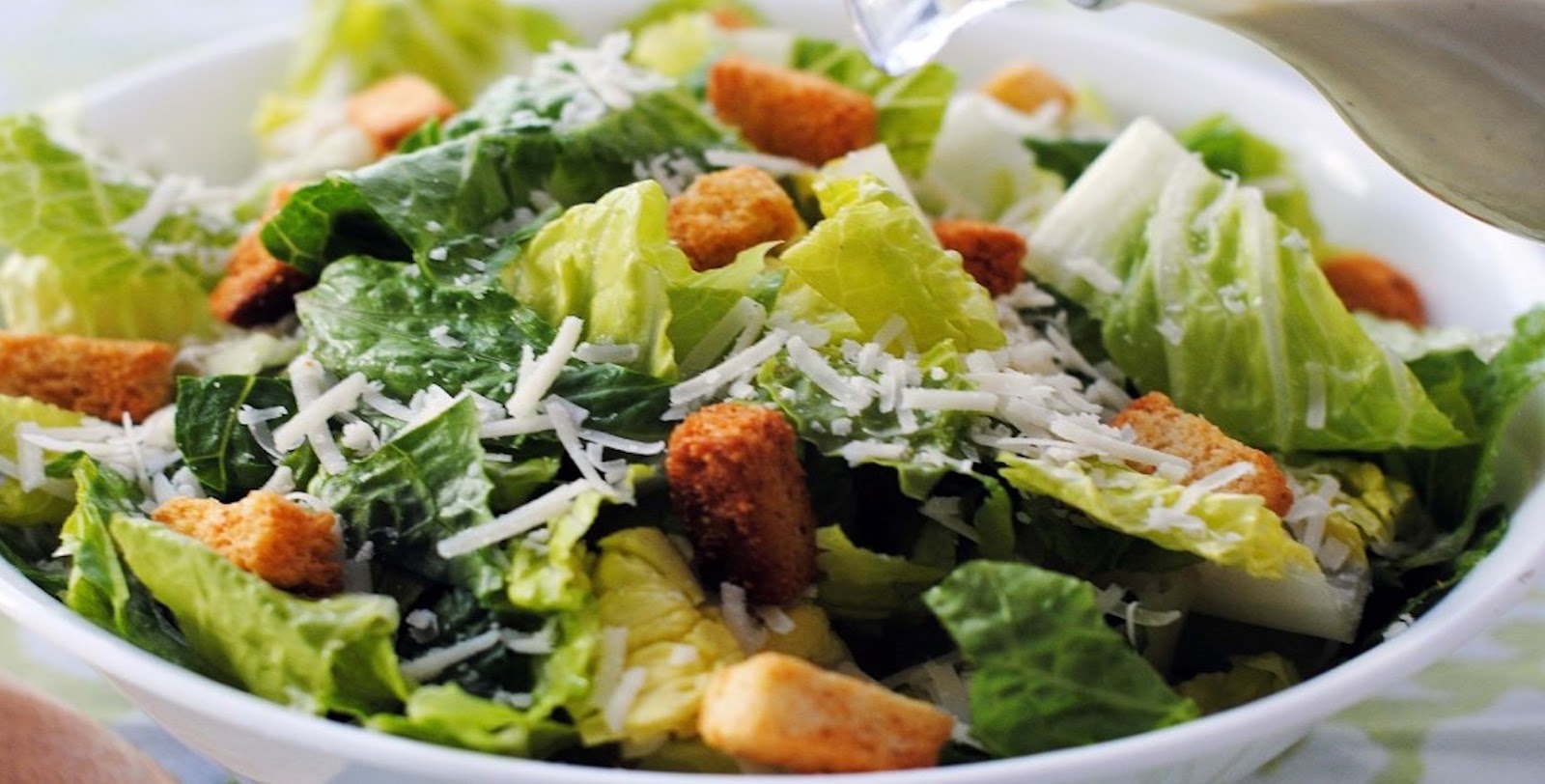
In 1924, restaurateur Caesar Cardini (1896–1956) invented the Caesar Salad at the restaurant of the Hotel Caesar in Tijuana, Mexico, over the Fourth of July weekend.

Running low on food, Cardini tossed together leftover ingredients from his kitchen—romaine lettuce, garlic, croutons, Parmesan cheese, boiled eggs, olive oil and Worcestershire sauce – to create a salad for his guests at tableside.

Caesar salad became particularly popular with the Hollywood moviei crowd that frequented Tijuana during Prohibition and it was a feature dish at Chasen’s and Romanoff’s in Los Angeles.

Caesar salad went on to be voted the “greatest recipe to originate from the Americas in fifty years” by the International Society of Epicures in Paris.

In the late 1930s, the Caesar salad was popularized in Europe by Walls Simpson, who, as the Duchess of Windsor, traveled widely with the Prince of Wales. In 1948, Caesar Cardini trademark the garlic dressing that gives the salad its distinctive flavor.
History of Caesar salad

Friday, April 21, 2017

Invention of Camembert cheese by Marie Harel

Legend holds that Marie Harel (April 28, 1761- November 9, 1844) is credited with inventing the gourmet cheese named for her native village of Camembert.

Marie was a 19-year-old cheesemaker. One day in 1819, her thoughts more on the boy next door than on her cheesemaking, she omitted the blue mold culture for one batch of cheese. Upon testing of that one batch with its soft creamy texture and delicious flavor, her fame was made. Camembert started life as a meager, dry, yellow-brown cheese made for family consumption.

Fortunately for cheese-lovers, the Harel family gave shelter to a young priest from Brie region, on the run during the French Revolution of 1789. Having closely watched his parishioners make cheese, he was able to return the Harel’s kindness by imparting his knowledge.
This helped them turn the small, rather bitter cheese into a delicious, softer, infinitely more palatable and memorable experience.

The first known reference to cheese from the village of Camembert is from 1706, and in 1760 a nearby may0r wrote that Camembert’s cheeses were reputedly even better than the local ones at Livarot’s market, although cheeses from Livarot and Camembert were still richer and better than those from Pont I’Eveque.

In 1855 a descended of Marie Harel presented Napoleon III with a sample of this cheese. He liked it and ever since then it became known as Camembert cheese.

In 1890 the characteristic round box was invented and Camembert quickly became of the most popular French cheeses conquering foreign markets as well.

After repeated attempts since 1909 to protect its name, Camembert de Normandie became a protected designation of origin cheese in 1983.
Invention of Camembert cheese by Marie Harel

Thursday, February 23, 2017

Affy tapple in history

In 1948 the first Affy Tapple was invented by the Kastrup family and their recipe was developed by Mrs. Edna Kastrup.

This was the first caramel apple in the United States with the tagline "The Original Caramel Apple!"

The Kastrup family opened the Affy Tapple store at Clark Street in Chicago in 1952.

They started as a fundraising tradition, selling it to local schools. In 1995 the company was sold to private investors.
Affy tapple in history

Friday, February 17, 2017

The invention of shredded wheat by Henry Perky

Shredded wheat was the first ready-to-eat commercial breakfast cereal. It was introduced in Denver in 1893 by lawyer Henry Drushel Perky.

Perky had invented a machine that flattened cooked wheat between two steel rollers, similar to the apparatus used for rolling oats. In addition, he added devices that shredded wheat flakes and then formed the shreds into biscuits.
On July 31, 1893, Perky patented a machine for the manufacture of shredded wheat. He originally displayed the invention at Chicago’s 1893 World’s Columbian Exposition in the ‘Coarse and Dry Wonders of Tomorrow Pavilion’.

Perky wanted to sell the machinery but instead found himself selling its product from wagons on the street.

The National Biscuit Company subsequently bought the rights to Perky’s invention, Despite extensive advertising, shredded wheat sales never took off until the 1920s - well after the patent had expires.
The invention of shredded wheat by Henry Perky

Monday, March 14, 2016

History of Cheetos

During the 1940s, the Frito Company began experimenting with extruded snacks. Fritos creator Charles Elmer Doolin invented Cheetos and in 1948 they released Cheetos, which were cheese flavored.

Made from corn, one might consider the Cheetos a distant cousin to the tortilla. Doolin believed in having Fritos and Cheetos as a side dish with a sandwich or a soup.

Cheetos were marketed by Herman Lay. Doolin died in 1959, and two years later his company merged with Lay’s, creating Frito-Lay, inc., with headquarters in Dallas.

By the beginning of the twenty-first century, Cheetos dominated the puffed snack market with sales twice as much as all the other top fifteen sales combined.

In 1988 Frito-Lay introduced Cheetos Cheddar Cheese Flavored Popcorn and launched a major promotion campaign starring Chester Cheetah, a cartoon character targeted at children and young adults.
History of Cheetos

Wednesday, March 09, 2016

Dr James C. Jackson and breakfast cereal

The modern breakfast cereals are entirely precooked and eaten in cold milk. The first precooked cereal was probably invented by Dr. James C. Jackson at Dansville, New York.

In 1863, Dr. James C. Jackson a vegetarian who operated the Dansville Sanitarium in Dansville, New York, advocated eating healthy food. He took graham flour baked it and broke it up into small pieces.

This was the first breakfast cereal and he called it granula. Jackson’s granula experiment was the beginning of a new concept in breakfast foods that would eventually change the way many Americans started the day.

Jackson’s health food was made by rolling a coarse whole meal dough into thin sheets which were baked until they were hard and brittle loaves. The crisp cookie-like material was broken and ground into small chunks, the chunks were again baked and finally fragmented into small granules.

The resulting coarse nuggets had to be reconstituted with liquid for a minimum of twenty minutes or preferably overnight before they were eaten.
Dr James C. Jackson and breakfast cereal

Sunday, February 21, 2016

Mozart chocolate (Mozartkugel)

Salzburg’s two main tourist attractions were its baroque architecture and its relationship with Mozart.

The invention of the chocolate Mozartkugel rapidly proved to be the ultimate form of tourist souvenir-cum-advertisement.

Mozart chocolate or Mozartkugel is a delicious candy created in 1890 by Salzburg confectioner Paul Furst to honor Salzburg’s famous musician, Wolfgang Amadeus Mozart.

At first, the confectioner called them ‘Mozartbonbon’ and only later by the name which they are known world-wide today: Mozatkugeln.

When Fürst presented his sweet creation at a Paris fair in 1905, he was awarded a gold medal. The chocolate-covered Mozartkugel have a center of marzipan mixed with pistachio nuts.
Mozart chocolate (Mozartkugel)

Wednesday, February 03, 2016

Frito Pie

Frito pie consists of chilli con carne ladles over Fritos corn chips, and then topping this with grated cheese and chopped onion.

The dish traditionally was served directly inside the corn chip bag, but because the bag has become thinner, the dish is usually served on a plate.

According to the Dallas-based Frito-Lay company, the mother of Elmer Doolin, the founder of Frito-Lay, invented the dish in 1932.

It became popular during the 1970s, but today Frito pie gourmets make them in a casserole dish instead of in the bag.

Frito pie is essentially an Americanized version of the Mexican tostada – corn tortillas topped with ingredients similar to those used in Frito pie.

In 2010, judges at the State Fair of Texas selected Texas Fried Fritos Pie as the best-tasting entry.
Frito Pie

THE MOST POPULAR POSTS