Showing posts with label fruit. Show all posts

Friday, May 26, 2023

History of lychee

Lychee originated in the area between southern China, northern Viet Nam and the Malay Peninsula. The lychee is known to have been cultivated in southern China as early as 1766 BC.

A significant lychee culture had developed by 200 BC in Hainan, Guangdong and Guangxi. In 111 BC, during the Han Dynasty, the royal record described a trial of planting lychee trees in the palace on the order of Emperor Hanwu. However, the trial ended in failure as lychee could not survive the northern climate.

The name ‘litchi’ or ‘Li-zhi’ in Chinese Pinying, originally meaning ‘to be detached from the branch’, first appeared in text in 200 BC.

Fresh lychees were an object of such desire that in the Tang Dynasty, one emperor set up a dedicated horse relay to deliver the fruits to the imperial court from harvests made far to the south.

Litchi was propagated through seedlings before the 10th century. However, the long juvenile period and variations in performance associated with this practice eventually convinced growers to use vegetative material. It is estimated that air-layering or marcotting was first used in the 4th century AD, and grafting was first recorded in the 16th century.

The lychee attracted the attention of European travelers, such as the Spanish bishop, explorer, and sinologist. Later the lychee was described and introduced to the West in 1656 by Michal Boym, a Polish Jesuit missionary (at that time Polish–Lithuanian Commonwealth).

Lychee reached India through Myanmar in 1789, and later on appeared in Bangladesh and Nepal. Litchi was first introduced into Thailand from China 300 years ago, by merchants who carried fruit with them. Some seedlings were adapted to the tropical conditions of the central region of the country and grew and fruited there.

It is thought to have been introduced into the United States around 1870 by General H. S. Sanford, world traveller and collector of exotic plants.
History of lychee

Wednesday, August 17, 2022

History of fig in United States

Hildegard of Bingen who founded the monasteries of Rupertsberg in 1150, freely prescribes figs for the infirm, but restricts their consumption by the healthy.

In 9 BC, figs were believed to be brought to Ancient Greece from Egypt - but their growth quickly spread across the land. It reached as far north as England in the early 1500s, when it was already reported as being cultivated in China.

Spanish Franciscan missionaries brought the fig to southern California in 1520, leading to the variety known as the Mission fig.

The first figs in the New World were planted in Mexico in 1560. Captain John Smith noted its existence in Virginia by 1621, the cultivar having been transplanted from Bermuda.

Figs were introduced into California when the San Diego Mission was established in 1769. Later, many special varieties were received from Europe and the eastern United States where the fig reached Virginia in 1669.

Nowadays the fig is an important crop for many regions with sub-tropical and tropical climates. In temperate zones production is limited and usually the fruit is consumed fresh locally or in dried, canned and preserved form.
History of fig in United States

Monday, April 19, 2021

History of bilberry

Bilberries (Vaccinium myrtillus L.) are the native European blueberries, closely related to the North American blueberry species (Vaccinium corymbosum L.).

Bilberry fruit was reported in the writings of ancient medical authorities such as Pliny and Theophrastus.

The common name bilberry is reported to be derived from the Danish word bollebar which mean “dark berry”. The species name myrtillus refers to the resemblance of the leaves to those of myrtle (Myrtus communis, Myrtaceae).

The genus name Vaccinium, reportedly first used by Pliny, is thought to be derived from Latin bacca, meaning “olive”, “berry”, or any round fruit or alternatively vacca meaning “cow”. Common names for bilberry in England include bleaberry, blueberry, and common whortleberry.

The medicinal activity of bilberry has been written about since at least the Middle Ages, and bilberry fruit and leaves have been used in conventional folk medicine in Europe since the 16th century. Saint Hildegard from Bingen (1098-1179 AD) indicated the use of bilberry for the treatment of eye disorders. She also is reported to have recommended the fruits for promoting menstruation.

The 16th century herbalist Culpeper reported on the use of bilberry for the liver and stomach, as an astringent, and for chronic coughs and diseases of the lungs.
History of bilberry

Saturday, February 13, 2021

History and origin of apples

Its primary wild ancestor is Malus sieversii whose range is centered at the border between western China and the former Soviet Union originated 4000 to 10000 years ago. This species is diverse and wild trees bearing the full range of forms, colors, and tastes are found in Kazakhstan and other independent countries of Central Asia formed from the breakup of the Soviet Union.

The cultivated apple then underwent hybridization with its wild relatives during its spread from the Tian Shan Mountains westward along the Silk Route.

Apples were certainly one of the earliest fruits to be gathered by people, and their domestication was probably preceded by a long period of unintentional planting via garbage disposal.

Based on combined archaeological and molecular data, it seems likely that, in the late Neolithic or early Bronze Age, travelers on the great trade routes that ran from central China to the Danube, carried the seed of the Central Asian wild apple west, either in saddle bags or horses’guts.

It was known to the Greeks and Romans and mentioned by Theophrastus in the third century BC. It is difficult to determine exactly when the apple was first domesticated, but the Greeks and Romans were growing apples at least 2,500 years ago. They actively selected superior seedlings and were budding and grafting 2,000 years ago.

Grafting is a practice that is thought to have begun about 3800 years ago based on a cuneiform description of budwood importation for grape in Mesopotamia. Indirect evidence has been obtained for the cultivation of apples 3000 years ago in Mesopotamia.

The Romans probably learned apple grafting, cultivation, harvesting, and storage from the Greeks, and brought the production chain technology to the rest of their empire.

The Romans brought the whole package to Western Europe and, for the last 2000 years, the domesticated apple has diversified and flourished worldwide. It was dispersed to the New World by European settlers during the sixteenth century.

During the late nineteenth and twentieth centuries, M. domestica cultivars found or bred in Europe, Russia, North America, New Zealand, Japan, and Australia were introduced throughout the world and form the basis for most current commercial apple production.
History and origin of apples


Thursday, October 22, 2020

History of Thompson seedless grape

Originally called “Sultanina”, Thompson seedless is thought to have originated in Persia in Asia Minor, in an area that now makes up parts of Iran and Turkey. It has been carried from region to region by civilized man in all temperate climates, and has been grown more recently in subtropical climates.

Between 120 and 900 BC the Phoenicians started vineyards in Spain and Greece. Concurrently the Armenians founded vineyards in present day Turkey, Iran and Iraq.

Seedless grape further named for William Thompson, the first person to grow the seedless grapes in California around the return of the twentieth century.

Its use spread throughout Asia Minor, the Mediterranean, northern Africa and then to Europe and it was from Europe that it came to America, South Africa and Australia.

It was bought by the Spaniards to Mexico and areas now occupied by California and Arizona. English settlers brought the Old-World grape with them and made plantings along the Atlantic seaboard in the colonies of Massachusetts, New York, Pennsylvania, Virama North Carolina, South Carolina and Georgia.

The variety of seedless grape was introduced into California in 1872 by William Thompson of Yuba City. Thompson acquired cuttings from the Elwanger and Barry nursery of Rochester, New York which described the variety as a grape from Constantinople grown in English hothouses under the varietal name ‘Lady De Coverly’.

The variety was quickly accepted by local planters, who misnamed it ‘Thompson Seedless’, an appellation that remained with it throughout its development and use in California. The variety’s mostly accepted name in the literature in ‘Sultanina,’ a derivation of ‘Sultanieh.’ These seedless grapes would eventually dominate fresh sales as well as raisin production.

By the 1840s, railways link made possible to ship grapes from southern states to northern states, making grapes available for a longer time in the summer. By 1880s, table grapes were commonly shipped from California to eastern markets.

Era before 1876. when Thompson seedless grapes were first introduced, the grape industry had been limited by the very tedious process of seeding the common muscat raisin. By introduction of seedless grape, the industry flourished.
History of Thompson seedless grape

Saturday, October 17, 2020

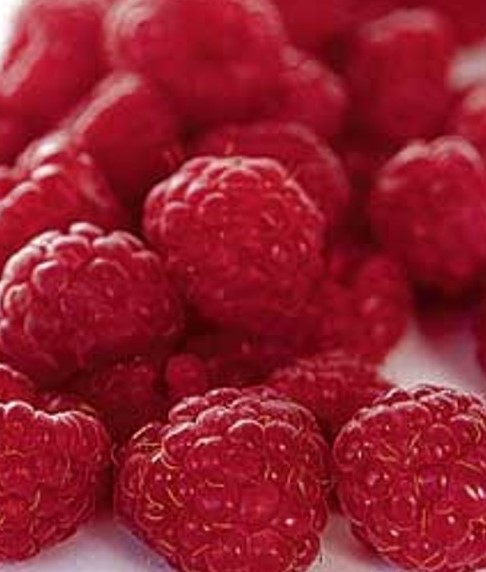
History of Red Raspberry

The fruits are native to Eastern Europe and North Asia, raspberry Latin name Rubus idaeus means ‘bramble bush of Ida’ as name hold another story for its naming when the Olympian Gods were looking for berries on mount Ida.

The red raspberry is a unique berry with a rich history that dates back to the first century when the fruits were gathered from the wild by the people of Troy in the foothills of Mt. Ida.

The fruit was first mentioned by Pliny the Elder, in about 45 A.D. Pliny wrote about “Ida fruits" that were harvested from the slopes of Mount Ida in Greece. Raspberries were not cultivated at that time, but were collected from the wild, primarily for medicinal use.

Dioscorides, Greek physician and pharmacologist, was a native of Anazarbus in Cilicia. In his well-known herbal De Materia Medica, Dioscorides describes the medicinal properties of the Idaean raspberry.

It is believed that raspberries to be first cultivated by Romans somewhere around fourth century AD as expressed by Palladio Opus agricultureae and seeds have been discovered at Roman forts in Britain.

The Romans are thought to have spread cultivation throughout Europe. In medieval Europe, wild berries were used for medicinal purposes and their juices for paintings and illuminating manuscripts. By the mid 1600s, raspberries had become popular in London markets.
History of Red Raspberry

Sunday, September 13, 2020

Ancient history of pomegranate fruit

Pomegranate are originated from central Asia. Pomegranate has an important place in the ancient cultures of the Mediterranean countries. It was cultivated in ancient Egypt and in early Greece and Italy. The fruit which was described by the Greek botanist Theophrastus about 2350 years before the present (BP) and is mentioned in many Greek and Turkish myths.

Edible pomegranates were firstly reported to be cultivated in Iran during 3000 BC. It was recorded that pomegranate cultivation in about 2200 B.C comes from the ancient civilization of Sumer, located in the lower Tigris and Euphrates valley, approximately the area of present-day Basra, Iraq. It is believed that the pomegranate was brought into the area by people who were migrating from the Zagros Mountains— on the present-day Iran and Iraq border.

Phoenicians established Mediterranean Sea colonies in North Africa and brought pomegranates to Tunisia and Egypt by 2000 BC. The Phoenicians were great traders who sent many ships to ports in the Mediterranean Basin.

During that time, pomegranates also naturalized around the world and reached China by 100 BC over the Silk Road.

It was probably introduced into Greece and the areas surrounding the Mediterranean Sea, as far west as Spain and Portugal by ancient sailors and traders.

Ancient traders in Central Asia and the Middle East referred to the pomegranate as the “fruit of paradise.” Arabian caravans carried the fruit with other trade goods and spices, as well as the water and food they transported to provision the travelers.

Cultivation of the pomegranates in the Roman Empire and Spain is estimated to be in 800s. It was introduced in the Indian Peninsula from Iran during the 1st century AD and was found growing in Indonesia in 1416 AD.

The Spanish sailors brought pomegranates to the New World and some missionaries introduced pomegranate in Mexico and California. The first clear evidence that the pomegranate was in the area to become the United States was in the early 1700s, when they were grown in Spanish Florida and English Georgia.
Ancient history of pomegranate fruit

Saturday, October 06, 2018

History of fig in ancient Egypt

Fruit farming started around 6000 BC with crops such as figs, plums and grapes in the ancient civilizations of Mesopotamia and Egypt.

Two species of fig were known to the ancient Egyptians, the sycomore fig (Ficus sycomorus) and the common fig (Ficus carica).

Sycomore fig trees were personified as goddesses in Egyptian art, and were perceived as dispensers of nourishment. The tree goddess is often shown in paintings and reliefs as a small figure crouched in the top of a tree or as a standing figure from whose head grows a small sycomore tree.

In ancient Egypt the sycomore fig was highly value for its fruit or syconia. Fig also can be fermented in to a fig wine. The species was widely use in Pharaonic medicine and is still use in folk medicine.

At that time, a special tool was used for the purpose of gashing sycomore fruits. Theophrastus (372-287 BC) witnessed this practice and correctly notes that after gashing.

The sycamore fig is referred to frequently in ancient Egyptian texts, thus in the Eighteenth Dynasty and in 251 BC sycamore wood to be used for building a boat is mentioned, and in the Twentieth Dynasty statues of the wood and sycamore gardens are also mentioned.
History of fig in ancient Egypt

Wednesday, August 29, 2018

Origin and the history of blackcurrant

The genus Ribes, was classified to the Saxifragaceae family originally, but was later placed within the Grossulariaceae family on the basis of morphological traits such as the presence of inferior ovaries, syncarpous gymnosperm and fleshy fruit. The blackcurrants are natives of Sweden and northern parts of Russia, as well as the northern counties of England.

The word “currant” is originating from the ancient Greek word for the city Corinth and was used to illustrate grapes grown in the region. Early references to Ribes currants use words like corinthes, corans, currans, and bastarde corinthes. The known blackcurrant culture in farms and gardens dates back at least as far as the Renaissance in Europe.

Blackcurrants have been cultivated in northern Europe for more than400 years and records were first described by the 17thcentury herbalists, e.g. Gerard (1636), referring to the use of blackcurrants as ingredients in tea and medical concoctions.

The use of blackcurrants fruit as a herbal medicine emerged in the Middle Ages. In the 16th century, European herbalists started to recommend Ribes berries or their syrup for the treatment of several illnesses, including bladder stones and liver disorders, cough and lung ailments.

In England blackcurrants were once called ‘squinancy berries’ because they were used to treat quinsy.

These small berries don’t appear to have been cultivated until around 1500. During 1700s , blackcurrants were domesticated in eastern Europe and sold to farmer’s markets in Russia. Blackcurrants were introduced in the USA along with red currants in the seventeenth century, but received little interest in terms of their domestication and cultivation.

During the Second World War blackcurrant cultivation was encouraged by British government due to in part the fruit’s suitability to the UK weather and the berries’ high content of vitamin C.

Nowadays blackcurrants are the leaders Ribes crop worldwide and are still mainly processed rather than used fresh, due to their strong flavor.
Origin and the history of blackcurrant

Friday, February 16, 2018

History of strawberry in United States

In 1780 the first strawberry hybrid variety Hudson, was developed in the United States. It was developed in Virginia and was easily distinguished from Hautboys, the European varieties. In 1834, Charley Hovey, a nurseryman in Cambridge, MA, developed a new variety name ‘Hovey’ which resulted from a planned cross, and it is an ancestor of most modern varieties.

The seeds were planted in boxes in the greenhouse and the young plant removed to the open ground in June. In 1835, the plants produced some fruit, and in 1836, they came into full bearing.

In 1852 James Wilson of Albany launched the first true hermaphrodite strawberry, ‘Wilson’s Albany’ often just known as ‘Wilson”.

The plant took off with a vengeance, as it eliminated the need to ensure that different male and female varieties were intercropped; good crops of the juicy red fruit were a certainly.

Commercial production of strawberries in North America flourished with the introduction of Wilson’s Albany and between 1860 an 1885, it was the most popular variety grown in the United States.

In 1999 New York state ranked seventh nationally in strawberry production, with $8.27 million in revenues from self-pick and consumer market sales.
History of strawberry in United States

Monday, December 18, 2017

The history of raspberry

The history of raspberry consumption and domestication goes back to ancient times. The European raspberry is a native of Europe from Greece and Italy, north into Scandinavia and far eastward into Asia.

It was name for Mount Ida, in Asia Minor and was possibly more or less cultivated in southern Europe in ancient times. Fruits were gathered from the wild by the people of Troy in the foothills of Mount Ida around the time of Christ. Records of domestication were found in 4th century writings of Palladius, a Roman agriculturist and seeds have been discovered at Roman forts in Britain.

It is believed that Roman soldiers spread the cultivation of this plant throughout Europe. Raspberry gradually grew in popularity over the centuries, and by the 1500s, R. idaeus was cultivated all over Europe.

King Edward I is recognized as the first person to call for the cultivation of berries. By the 17th century, British gardens were rich with berries and berry bushes. In 1829, 23 raspberry cultivars were liste0 in the “History of English Gardening”.

It was early brought to America by colonists from Europe and prior to the middle of the nineteenth century was the only raspberry commonly cultivated in USA.
The history of raspberry

Saturday, November 19, 2016

History of caramel apple

The Caramel apple was invented in 1950s by Dan Walker, a sales representative for Kraft Foods. Before that there was a traditional candied apple the one with the cinnamon flavor and the vivid red color which was invented by candy maker William Kolb.

Like candy apples, which are made by coating an apple with a layer of sugar that has been heated, caramel apples’ invention also resulted from experimentation with holiday candy. According to Walker, caramel apple was discovered when he experimenting with excess caramels from Halloween sales; he simply melted them down, and added apples, and the rest is history.

While caramel apples were made manually by hand for the first decade or so of their existence, Vito Raimondi of Chicago, Illinois decided it was time for an automated way to make caramel apples. He invented and patented the first automated caramel apple dipping machine in 1960.

Making caramel apples got a lot easier in 1977 when Kraft Foods introduced its craft sweet wrapples. Wrapples came with sheets of caramel that can be wrapped over fresh apples then stuck a popsicles stick through the top.

Caramel apple has evolved today with many people dipping and decorating them in chocolate, nuts and other candies. One of the caramel apple variants, taffy apples - Caramel apples are often called “taffy apples” when further ingredients such as peanuts are applied.
History of caramel apple

Thursday, November 03, 2016

History of miracle fruit

This small red berry has been used in West Africa to improve the taste of acidic foods. Since the miracle fruit itself has no distinct taste, this tasty modifying function of the fruit had been regarded as a miracle.

This little red berry was first mentioned in the 18th century diary of explorer Chevalier des Marchais. The dotro who assembled his journals (published as Voyage du Chevalier des Marchais en Guinea, en 1725) wrote that, “Chewed without being swallowed, it has the property of sweetening that which one can put afterwards in the mouth which is sour or bitter.”

In 1852, the chemist W. F. Daniell was the first European to scientifically study it and he gave the name ‘miraculous berry’.

The so-called ‘miracle berry’ was rediscovered in the 1920s by a US Department of Agriculture collecting expedition. It is an ornamental shrub, usually branched with dense foliage that gr0ws no higher than 6 feet and bears several crops each year.

It took until 1968, for separate groups of scientists to isolate the berry’s active ingredients. In 1968, Beidler in Tallahassee and independently – H. van der Wel at the Unilever Research Laboratories in Vlaardingen, Holland, showed the active principle of miracle fruit to be a glycoprotein with a molecular weight of 44 000. It has been named miraculin.

In 1974, a petition for affirmation of the GRAS status of miracle fruit was submitted by the Miralin Company, mainly based on the fact that miracle fruits have been consumed by human since before 1958. In 1977, the petition was denied by the FDA.
History of miracle fruit

Tuesday, May 24, 2016

History of Concord grapes

New England is the birthplace of the Concord grape. The Concord grape owes it origin to Ephraim Wales Bull, whose occupation was goldbeating, making gold leaf out of gold, and whose avocation was gardening. In 1840, he moved from Boston to Concord, Massachusetts where he would have more land to pursue his hobby.

It grew from a seed planted in 1843, which bore fruit in 1849. According to him, some boys brought wild grape up from the river and scattered them around his property.  A seedling appeared which he tended and when it fruited he panted seed from it.

Prior to the appearance of the Concord, grape growing in Eastern American had limited success. Bull planted some 22,000 seedlings before he had produced the grape that would own the jelly market his cutting eventually garnering him a tidy $1,000 apiece.

It took a man from New Jersey to turn Bull’s grape into an American legend.  In 1869 Dr. Thomas Welch, boiled and sieved 40 pounds of Concord grapes and employing the Pasteur method of sterilization, proceeded to bottle the world’s first 12 quarts of fresh, unfermented grape juice.

Today US grape farmers harvest more Concord grapes than all other varieties combined.
History of Concord grapes

Thursday, May 05, 2016

McIntosh apple

It was said that to have originated as a chance seedling in the orchard of one John McIntosh in Ontario, Canada the McIntosh apple is a hero to some pie makers and a villain to others.

In the spring of 1811, John McIntosh stumbled upon a handful of apple tree seedlings while clearing land near Prescott, Ontario where he planned to establish a farm.

Instead of tossing the tiny trees onto a pile of brush that would later be burned he transplanted them to a location closer to his home.

By the following year all but one of the trees had died. He nursed it slowly grew, eventually producing a red, sweet and crisp fruit with a tart taste. This became the McIntosh Red so named because of the family’s name and the distinctive color of the skin.

In 1835, McIntosh’s son Allan McIntosh learned the art of grafting and the family began to produce the apples on a major scale. He established a nursery and extensively promoted the species.

To this day no one is certain how the orphan tree discovered by McIntosh arrived on his property. Experts speculated that it likely grew from the seeds of an apple core tossed onto the ground by a passerby.
McIntosh apple

Wednesday, November 18, 2015

History of bael fruit

Beal fruit has been known in India since ancient times, and the tree on which it grows is regarded as sacred.  The history of this tree has been traced to Vedic period (2000 BC – 800 BC). The mention of bale fruit has been made in Yajurveda.

The tree has great mythological significance and abounds in the vicinity of temples. The leaves of the tree are traditionally used as sacred offering to Lord Siva, the God of health.

In the ‘Upavna Vinoda’, a Sanskrit treatise on silviculture and in the ‘Brihat Samhita’, mention was made of bael fruit. It has been said that this tree indicates the presence of underground water.

Three reaches about 40 feet in height and its fruit are generally about 2 to 5 inches across. The Portuguese called them marmelos because they gave the flavor of marmalade and can be eaten raw.

Garcia d’Orta who resided in India as physician to the Portuguese viceroy at Goa in the 16th century, wrote an account of the fruit under the name of Marmelos de Benguala, describing its use in dysentery.
History of bael fruit

Thursday, October 01, 2015

History of avocado during ancient time

Avocado pear Persea Americana is a native to Central America, but now grown in tropical and subtropical countries of the world. The Aztecs called the avocado ‘ahuacatl’, the Spanish called it ‘aguacati’ and the English called it ‘avocado’.

Seed remains found in ancient human settlements in the Tehuacan Valley suggest that the avocado could have been used as early as 8000-7000 BC and possibly domesticated at least 5000 BC by Mesoamerican groups.

The Toltec and Mayan civilizations disappeared nearly ten centuries ago, yet among their ruins wild and domestic avocados are found growing side by side. In ancient times in the America, avocado was used to replace meat because it contains all the nutrients in meat.

The Mayan Indian people and Aztec Indian people were eating avocados for more than two thousand years. The Aztecs Indians mixed them with peppers and hot spices.

Mayan, Aztec and also Olmec cultures praised avocado as one of the ‘gift of God’. Aztec and Man cultures used decocts of avocado seeds as a potent agent to treat mycotic and parasitic infections. They are used also against diabetes.

The prehistoric fruit was under cultivation in North, South and Central Americas for thousands of years. From there, avocado dispersed to Europe and the rest of the world.
History of avocado during ancient time 

Wednesday, June 10, 2015

Origin of mulberry fruit

Mulberry has its origin in different part of the world.  The red mulberry is native of United States, whereas black mulberry is a native to western Asia but long agog found its way to Greece and Rome, and thence to other parts of Europe.

The mulberry as dedicated by the Greeks to Minerva, probably because it was considered the wisest of trees and Jupiter the protector was called Morea.

White mulberry is considered to have originated in China and is grown mainly in tropical countries. It has been grown primarily for its leaves, as silkworm folder and it was for this purpose that the trees were brought to other parts of the world.

The first black mulberry trees of England are said to have been planted at Sion House, the seat of the Duke of Northumberland in 1548. Others say that the first mulberry tree planted in England was in the garden at Lambeth Place, by Cardinal Pole 1555.

In the early 1600s, the English King James I, shipped white mulberry trees and silkworms to the colony of Virginia to start silkworm production, which was unsuccessful. However, enthusiasm for silkworm culture reached a peak in the decade of the 1830s when a new, supposedly superior type of mulberry was introduced.
Origin of mulberry fruit

Friday, February 20, 2015

History of fig

According to the Old Testament, Hezekiah who lived 600 years before Christ used figs as a tropical application to a boil.

Common figs or ficus carica is one of the first plants cultivated by man, chiefly for it edible fruit which is either eaten raw, dried or made into jams.  It has been cultivated since pre-historic times and was domesticated at least 11,000 years ago in the Middle East.

The figs seems to have been used as  food in great antiquity in the eastern Mediterranean or southwest Asia, for pips resembling those of Ficus carica were found at certain Neolithic sites in the eastern Mediterranean, the earliest dating to 7000 BC or before.

The remnants of fig have been found and there are clear evidence of cultivation in Mesopotamia, Syria, Palestine and Egypt in the third millennium BC. In ancient Egypt, the fig was among the most frequently represented fruit in tombs. It was also cultivated in ancient Greece.

The wood is said to be indestructible, and is therefore used for Egyptian mummy cases which have been found in a sound state after the lapse of 3000 year.

The figs have been brought into cultivation in the southern Arabian Peninsula by 3000 BC.

The Spanish brought domesticated figs to America in the 16th century and later English colonists found figs growing along the southeastern coasts of North America.

In colonial times, New Englanders imported figs from the Southern Colonies and the Caribbean.
History of fig

Tuesday, January 20, 2015

History of mandarin oranges (Citrus reticulata)

China is one of the native homes of the mandarin (Citrus reticulate) and has a cultivation history of about 4000 years. Mandarin takes its name from a group of high ranking public officials in imperial China whose hats had a button shaped similarly to the fruit and whose robes were the color of the fruit.

In T’ang times(618-907 AD), the fruiting of mandarin trees in the imperial gardens apparently indoors, led to ‘formal congratulations to the monarch oh his divine charisma’.

Although mandarins were cultivated in China as early as the time before the Xia dynasty (21st-16th century BC), the concept of fruit variety was not developed until about the 3rd century during the Chin dynasty (265-420 AD).

In the early fourth century AD, Chi Han had already distinguished red and yellow forms of mandarins (chu and kan) in the south, one of them famous variety known in present day Canton and the West as Ponkan or ‘Chinese honey orange’.

The mandarin orange arrived in India at the beginning of the Christian Era. It was probably brought by the Shan people of China from Yunnan to Assam.

Mandarin seeds were brought to Japan from China, probably to Kagoshima on Kyushu Island. The forts reference to the mandarin in Japanese literature was made by Kokwan (1278-1346 AD).

An awareness of the Chinese fondness for oranges may have brought on the interesting tradition, reported for 17th century Java, that when a Chinese ship arrived in the port of Bantam, representative of the ruler brought a gift of oranges along with two umbrellas.

The first European country to grow the small, loose-skinned mandarin orange was England. The first mandarin tree was brought there from China in 1805. It has assumed increasing importance in the European market only during the second half of the twentieth century.

The mandarin orange was first introduced into the United States by the Italian Consul to New Orleans, La, from Italy, between 1840 and 1850, and was later taken from there to Florida and California.
History of mandarin oranges (Citrus reticulata)

THE MOST POPULAR POSTS