Showing posts with label Greeks. Show all posts

Sunday, December 10, 2023

Liquorice in Ancient Times

Liquorice is sourced from the roots of the Glycyrrhiza Glabra plant, with its historical usage tracing back to prehistoric times in Europe, particularly well-documented among ancient Greeks. The plant's botanical name, derived from Greek words meaning "sweet root," underscores the recognition of liquorice's natural medicinal attributes across various ancient civilizations, including the Greeks, Egyptians, Chinese, and Hindus.

Greek historian Herodotus lauded the Scythians for their military prowess, horsemanship, and efficiency in cavalry, noting their ability to endure prolonged thirst by consuming liquorice root and mare's milk.

Theophrastus, a Greek botanist of the IV–III century BC, chronicled the early medicinal use of liquorice in Europe and speculated that the Greeks might have acquired knowledge of its pharmacological properties from the Scythians, who inhabited the region north and east of Greece.

In the first century AD, ancient Greek physician and botanist Pedanius Dioscorides featured liquorice among the medicinal substances in his influential work, De Materia Medica. This compilation, encompassing approximately 650 plant-based remedies, served as a standard reference for over a millennium.

Throughout ancient Roman times, liquorice retained its status as a well-known remedy, as attested by Roman authors like Aulus Cornelius Celsus, Scribonius Largus, Claudius Galen, Marcellus Empiricus, and Cassius Felix. Pliny the Elder, in the first century B.C., detailed various functions of licorice root, asserting its efficacy in lozenge form for voice clearing and delaying hunger and thirst. Romans even integrated liquorice into their military routines, with troops chewing the root as a medicinal stick while marching, recognizing its thirst-quenching properties.
Liquorice in Ancient Times

Tuesday, July 28, 2020

Ancient history of turnip

Brassica is the Latin word for cabbage, rapa means turnip, and campestris refers to “of fields” in Latin.

The turnip was first developed by prehistoric man around two thousand years ago for its enlarged root. It is difficult to trace its origins to an exact location, but it is believed to have first been cultivated in Northeastern Europe or Western Siberia. By 300 B.C., turnips were domesticated and grown in Greek civilizations.

The word laptu in ancient Assyrian dates back to 1800 B.C. The turnip is a very well-known vegetable in the entire Middle East. In Ancient Greece and Rome, the turnip was an important domesticated crop plant and they thought highly of the turnip and developed several new varieties.

The Greek Theophrast (371 - 285 B.C.) called it gongylis and the Roman Columella (35 - 65 A.D.) distinguished between the cultivation and conservation by lactic acid fermentation of napus and rapa, saying that napus only forms a tender root, whereas rapa has a thick stomach.

Pliny (23 - 79 A.D.), an ancient Roman author, used the names rapa and napus to describe turnips that were long, flat, or round. He described the varieties in ancient Rome, showing that the turnip was a favorite crop in mountainous regions of the Apennine and the Northern parts of Italy.

In addition to being appreciated for their food value, they have been used as a wrinkle remover by the Romans, and as a treatment for frostbite, gout, measles, and arthritis.

English of the Middle Ages turned napus into naep in Anglo-Saxon. In the Middle Ages the turnip was a staple food plant. In the Capitulare de Villis, Charlemagne (around 800 A.D.) gives instructions on which crops had to be planted and had to be given to his court; among those listed is napi. Hildegard von Bingen (1098 - 1179 A.D.) uses the term ruba and Albertus Magnus (1193 - 1280 A.D.) distinguishes napo and rapa.

Turnips were introduced into North America by early European settlers and colonists. They grew well in the South and became a popular food of this region. Turnip greens, which became an integral part of Southern African-American cuisine, are thought to have been adopted into this food culture because of the role they played during the days of slavery.
Ancient history of turnip

Friday, November 22, 2019

History of sausage

The origin of meat processing is lost in antiquity but probably began when mankind learned that salt is an effective preservative. Sausage making evolved as an effort to economize and preserve meat that could not be consumed fresh at slaughter.

It is often assumed that sausages were invented by the Sumerians in the region that is Iraq today, around 4000 BC. Reference to a cooked meat product stuffed in a goat stomach like a sausage was known in Babylon and described as a recipe in the world’s oldest cook book 3750 years ago.

The Chinese sausage Làcháng, which consists of goat and lamb meat, was first mentioned in 589 BC.

Homer referenced sausage in the Odyssey as one of the favorite foods of the Greeks. He gives in detail the slaughter of a heifer as part of a religious ceremony. The collection of the blood from the animal and the manner of slicing and roasting the meat reflects the importance the Greeks placed on animal products as food. The prize of a sausage was awarded Odysseus when he defeated the sturdy beggar Iros in a boxing match. The sausage was described as a type of black pudding, stuffed with blood and fat and sizzled on the hearth.

Epicharmus (ca. 550 BC - ca. 460 BC) wrote a comedy entitled “The Sausage”. Numerous books report that sausages were already popular among the ancient Greeks and Romans.

It is believed that sausages were brought to Britain by the Romans some time before 400 AD. Since then, various English counties have each had their own way of flavouring their local sausage – Lincolnshire favours fresh sage and Cheshire uses caraway and coriander.

The history of sausage is literally given by its name and many of today’s sausages derive their names from the city where they originated, such as Vienna, Frankfurt, Mettwurst, Genoa, Knoblanch, Bologna, Salami, and many others.

Nowadays there are numerous types of sausage casings including: Natural and artificial such as Collagen, Cellulose and Plastic. Collagen, Cellulose and plastic casings are relative newcomers to the artificial field, mainly born out of market demand during the technological maelstrom of the early twentieth century.

Today, the sausage manufacturing industry in the U.S. must adhere to government standards for ingredients and processing. In addition, accurate labeling requirements ensure that the consumer is informed of the ingredients in a sausage product. Regulations are more specific for several categories of sausage products, which have specific production processes and storage requirements.

History of sausage

Tuesday, June 05, 2018

History of lovage (Levisticum officinale)

The Greeks, who called it ligustikon, chewed the seed to aid digestion and relieve flatulence-a medicinal use which was promoted in the Middle Ages by Benedictine monks. According to the Ancient Greek physician and pharmacist, Dioscorides, lovage was referred to as ligusticum because it grew wild in shady areas in the Alps of Liguria. He described the plant’s characteristics as resembling dill with a thin stalk and subtly aromatic leaves.

The common name is derived from the fact that in many European countries the herb had a traditional reputation as a love charm or aphrodisiac. The botanical name is a corruption of the earlier name Ligusticum, after Liguria, Italy, where it once grew in abundance. 12th century Hildegard of Bingen used lovage as an important cooking spice. Lovage flowers are attractive to tiny parasitic wasps whose young prey on garden pests such as cutworms and tent caterpillars.

In the middle ages lovage was one of the most important cooking herbs and was a popular salat (salad) herb and often eaten fresh. Lovage preparations were used during the Middle Ages mainly as a emmenagogue, carminativum, direticum and remedy for various skin ailments and were mentioned by Lonicerus (1564) and Matthiolus (1501-1577) according to Madaus (1938). The medieval sourcebook: the Capitulary de Villis of 9th century contains lovage as one of many culinary and medical plants that should be cultivated in every imperial garden (Arnold 1923).

The colonists in New England found an additional use for the dried root. They nibbled bits of it in church to chase away the weariness caused by long and tedious sermons. In 1892, J. Bornmuller found a form of the plant, Levisticum officinale, growing wild in the mountains of Persia and southwestern Asia. It most likely spread later to Italy as a cultivated plant from the Near East region.

In the late nineteenth century, lovage was used as a confectionery ingredient in France. It also flavored preserves and was often used with borage to spice soups. Also, in France, Piedmont, and Wallis, the leaves and stalks were cooked like celery.
History of lovage (Levisticum officinale)

Friday, February 10, 2017

Lemon uses in history

Lemon have been known, used and traded since approximately 600 BC when Arab traders brought them to Asia.

The Athenians received lemon from the Persians, who ere neighbors of the Medes and from Attica its spread all over Greece.

Lemons were only known to the Romans at a very late period and at first were used only in cupboards and drawers to protect wool from moths.

There was also a belief that boiling a whole lemon in Attic honey until the lemon completely dissolved made syrup that both Greeks and Romans believed to be a protections against every poison, if taken medicinally in the morning.

The first widespread use of lemons was in possets, hot spicy drinks which developed from the fifteenth century onwards. From the sixteenth century they usually contained lemon or orange juice mixed with sugar, cream and spices.

The lemon has been prized for its numerous medical uses, many of which are still used today. One such example is the use of lemons by the British Navy in the 1800s to fight the effects of scurvy.
Lemon uses in history

Monday, September 19, 2016

History of leavened bread

Unleavened bread was the primitive food of man, in the early stages of civilization and before he learned to leaven it. It was adopted by the Jews on their departure across the desert from Goshen, as the simplest mode of preparing bread in the wilderness; and has ever been the daily food of the Arabian nomad.

In the ancient Near East leaven was known from the third millennium BC onwards. Egyptians discovered that a mixture of flour and water left for about of time to ferment, increased in volume, and, after baking along with other fresh dough, it produced soft and light breads.

In Greece, bread was a food solely for consumption on wealthy homes. The Greeks used leavening for sourdough was adopted from Egypt about 800 BC. The Roman derived it from the Greeks, and until about 200 BC, when bakers were first established in Rome, the term ‘pulse eating nation’ was applied to the Romans by way of reproach.

The first time that leaven in its negative form, occurs in the Bible is in Genesis 19:3 where that Lot ‘did baked unleavened bread’ for the angels and ‘they did eat’, which shows most plainly that leaven, a common commodity , was the appropriate food doomed, wicked Sodom.

Leaven was forbidden to the Hebrews during the seven days of the Passover, in memory of their ancestor who when they went out of Egypt, were obliged to carry unleavened meal with them and to make bread in haste.
History of leavened bread

Monday, March 28, 2016

History of dill seed

Dill is native to the Mediterranean countries and southern Russia, grown for thousands of years and it is now cultivated widely in Europe, India and North America. Dill has been used since classical times in herbalism to aid digestion.

The name comes from the Norse word ‘dilla’, meaning ‘lull’ apparently because the seeds were believed to be good for insomnia.

The ancient Greeks used dill as a remedy for hiccups as well as for culinary purposes, and it has been a part of Mediterranean cuisines ever since. According to Dioscurides, ancient Greeks sued dill to flavor wine and in the preparation of the ‘anethinon myron’ and the ‘anthinon wine’.

The Romans credited the plant with fortifying qualities and made certain that gladiators were well fortified with it.

The Romans also classified dill as a plant of Bacchus, and fashioned it into wreaths and balls as a symbol of joy.

Dill seed is used as a condiment and can be used to flavor root vegetables. In Medieval Europe dill could not be grown fast enough to satisfy consumer demand for its uses in love potions, for casting spells and for protection against witchcraft.
History of dill seed

Tuesday, March 01, 2016

Ginger during ancient times

Among the spices of the world, ginger assumes considerable importance, along with turmeric, as one of the most important and sought-after medicinal spices. In ancient times ginger was more valued for its medicinal properties and played an important role in primary health care in ancient India and China.

Many believe ginger was originally from India and was brought to Europe and East Africa by Arab traders from India.

Ginger was exported from the ancient Malabar Coast on the southwest coats of peninsular India, and the Arab traders might have used only the prevalent local Tamil name for trading the commodity.

It was widely used by the Greeks and Romans and was a common article of European commerce in the Middle Ages.

As early as the second century AD, in Rome ginger as one among the very few items on which duty was levied at Alexandria the port of entry.

In England it must have been well known even prior to the Norman Conquest, for it is frequently named in the Anglo-Saxon beech-books of the eleventh century as well as in the Welsh ‘Physician of Myddvai’.

Together with pepper, ginger was one of the most commonly traded spices during the 13th-14th centuries. From East Africa the Portuguese brought ginger to West Africa and other regions of the tropics in the 16th century.
Ginger during ancient times

Sunday, January 17, 2016

History of carrots

The first proven reference of carrot comes from Egypt in the time of King Merodach-Baladin around 800 BC, though some have identified picture in a 2000 BC tomb as a purple carrot.

The Greeks and Romans extensively used across for medicinal purposes; to reduce abortions amongst other things. The Greeks believed that carrots were not only food but also a powerful love medicine, They though this vegetable made men better lovers and also made women more interested in romance.

The Romans succeeded in cultivating better tasting variants and clearly distinguished between these and the wild ones, with different ’species’ names, The word carota for the cultivated appears around 200 AD. Romans enjoyed carrots with there everyday meals. They usually ate them dressed oath oil, salt and vinegar or cooked in a sauce made from cumin salt, oil an cold wine.

Moors and Arabs introduced carrots with purple and yellow roots from Afghanistan to Spain in the twelfth century. From there, these plants were distributed all over Europe. In 795 Charlemagne included the carrot in a list of recommend plants for the gardens of his empire.

The garden or cultivated carrot was first introduced into England by the Flemings during the reign of Queen Elizabeth. Finding the soil about Sandwich in Kent very favourable for the culture of the carrot, the emigrants soon engaged in the production on the spot. By the Elizaberthan period carrots had become very popular in England.

In the mid eighteenth century Johann Hermann Knoop described orange carrots which he suggested had been derived from yellow ones in the Netherlands.
History of carrots

Tuesday, February 10, 2015

Ancient history of cardamom

Cardamom, popularly known as the ‘Queen of Spices’ is the second most important spice crop in the world, next to black pepper, which is known as the ‘King of Spices’. It is the third most expensive spice in the world, after saffron and vanilla.

Cardamom has a history as old as the human race. The earliest reference to cardamom is from the ancient city of Nippur, Sumaira, dated 2000 BC, on a clay tablet. It indicates that ground cardamom was mixed with bread and added to soups.

It is mentioned in ancient Vedic texts by Theophrastus in the fourth century BC and later by Dioscorides in the 5th century BC.

According to Taitreya Samhita (3000Bc), in ancient Hindu culture, sacrificial fire was a common ritual and in ancient texts, cardamom was an ingredient, along with several other materials, the sacrificial fire, solemnizing a Hindu marriage.

Cardamom grew in the gardens of the King of Babylon in 720 BC. It was used as early as the 4th century BC by Indian Ayurvedic experts and by ancient Greeks and Romans. Spices were the symbols of royalty and luxury and cardamom was used in the manufacture of perfumes during Greek and Romans times.

The ancient Egyptians chewed cardamom seeds as a tooth cleaner. It was featured regularly in the ‘Arabian Nights’ for its aphrodisiac qualities and the ancient Indians regarded it as a cure for obesity.

Cardamom is believed to be a native of India. It was probably imported into Europe in 1214 AD. Viking explorers visiting what is now Turkey about one thousand years ago brought it back to Scandinavia where it still remains a popular spice.
Ancient history of cardamom

Sunday, November 09, 2014

Bread in ancient Greek

Greeks have three basic ingredients that have throughout history been used in their cuisine: bread, wine and olive oil.

Bread is a fundamental part of Greek life – it appears in some form at very meal and special festive breads are of great significant in religious festivals and family celebrations.

The first description of bread is found in Athenaeus’ (170 – 230 AD) food related text Deipnosophistae. The book is built out of a series of dialogues between diners.

Greek bakeries, piled high with breads of every conceivable size and shape, have a special magic. It is the companion to every food. Greeks often eat bread for breakfast with some cheese.

Different varieties of bread are used, such xoriatiko, lefko, polisporo, mavro and so on.

Poor people supplemented bread loaf with little more than fruit, mushrooms and vegetables gathered from the wild. On the tables of the wealthy the variety of fish and meat dishes and the many savory and sweet confections were still typically preceded by wheat and barley loaves.

In rural communities bread is still baked in fournos and the village baker supplies a range of breads, from the basic everyday loaf to wonderful crusty wholemeal, barley or stone ground breads.

The ancient Greeks did not use knifes or forks, eating primarily with their finger. They did occasionally use a spoon or piece of hollowed-out bread for eating soups and other liquids.

They also used pieces of bread to wipe their hands after eating and the bread was then given to dogs.
Bread in ancient Greek

Sunday, August 03, 2014

Ancient history of bay leaves

Bay leaves are bitter and sweet in taste. Bay leaves come from the ancient Mediterranean bay laurel tree, and are one of the most widely used culinary herbs on Europe and North America.

Used since Roman times, when it symbolize victory and greatness and was used to crown emperors, poets, and writers, the bay leaves is a compulsory ingredient in all European and Mediterranean cooking for flavoring stocks, sauces, soups , pickles , preserves, meats and vegetables.

The term baccalaureate and bachelor for academic degrees is derived from baccalaures (laurel berry), because of the ancient Greek and Roman practice of honoring scholars and poets with garlands of bay branches.

The Roman generals crowned themselves with bay leaves when they returned home victorious from battles. The soldiers added the leaves to their baths to sooths fatigue and injuries.

In Biblical times, during the Roman Empire and also in the Middle Ages, people associated bay leaves with goodness and saw it as a protection against evil.
Ancient history of bay leaves

Wednesday, June 04, 2014

History of basil (Ocimum spp.)

In India it is regarded as a sacred herb and is used for decorating temples. The people there worship basil more highly than kings. It is sacred herb dedicated to the gods Vishnu and Krishna.

The cultivation of basil spread from its native India through Asia to Egypt at least 4000 years ago and from there to Rome and southern Europe.

Legend has it that basil was found growing around Jesus’ tomb after the resurrection. It was used in Greek Orthodox chci8rches in the preparation of Holy Water.

It was widely used in ancient Rome and Greece. Its name derives from the Basilisk, a mythical serpent-like creature whose venom was so potent it could kill just by looking.

The Greek called it the ‘devil plant’ but they also considered it a powerful love charm. A sign of mourning in ancient Greece and a sign of love in ancient Rome, today in Crete basil signifies ‘love washed with tears’ and in some parts of Italy it remains a lover’s emblem.

It does not appear to have reached Britain until the 16th century and was then carried by early settlers to North America.
History of basil (Ocimum spp.)

Friday, April 18, 2014

History of oregano

Oregano’s name comes from the Greek word oros ganos, meaning joy of the mountain.

Mediterranean oregano was originally grown extensively in Greece and Italy. Records on the use of oregano date back thousands of years: famous ‘hyssop’, mentioned in the Bible, is believed to be an Origanum syriacum L. plant.

Originally used to flavor ale and beer in Europe, oregano is an essential spice in Italian pizzas, Tex-Mex chili con carne, and Mexican beans. Early brewers used oregano in their beer to disguise off flavors before they discovered hops. 

The ancient Greek and Egyptians used oregano to flavor fish, meats, vegetables and wine.

Pliny, the ancient Roman scholar, recommended oregano poultices for scorpion and spider bites.

As early as the 1400s, oregano had a variety of medicinal, cosmetic and household uses. It was used as a palliative for headache, rheumatism, colic, upset stomach, cough and scurvy.

Before World War II, oregano was almost unknown in the United States. However, its popularity skyrocketed with the popularity of pizza.
History of oregano

Tuesday, March 04, 2014

Ancient history of cinnamon

Cinnamon is one of the oldest spices known used by humankind. At one point in ancient history, cinnamon was so highly treasured that it was even considered more precious than gold.

The term cinnamomum is derived from the Greek root kinnamon or kinnamomom, meaning sweet wood. Cinnamon was one of the first spices to reach the Mediterranean; the ancient Egyptian used it in embalming, and it’s mentioned repeatedly in the Old Testament.

It was also used as beverage flavoring and medicinal herbs. Asian and Near Eastern people have long used cinnamon to flavor meat. Nero, an emperor of Rome in the first century, burned a year’s supply of cinnamon on his wife’s funeral pyre as an extravagant gesture meant to signify the depth of his loss.

Greeks and Romans did not really introduce it into their cooking until the final period of the Roman Empire, around the third and fourth century.

Cinnamon brought from China was well known to Arab perfume makers by the 9th century.

Cinnamon was prized in medieval Europe as a preservative and also as a staple ingredient in cooking. Meals including both meat and fruit were prepared in a single pot and cinnamon along with ginger helped flavors blend together.
Ancient history of cinnamon

Sunday, January 28, 2007

History of Bread

Food History
Bread is the oldest and most important baked product. It has been made from many of the grains, including wheat, corn, rye, rice, barley, oats and even buckwheat. Bread, in one form or another, has been one of the principal forms of food for man from earliest times.
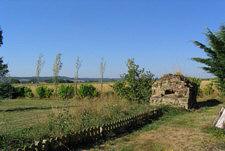
Wheat has been found in pits where human settlements flourished 8,000 years ago. The ancient Greeks and Romans knew bread for a staple food even in those days people argued whether white or brown bread was best.

Further back, in the Stone Age, people made solid cakes from stone-crushed barley and wheat. A millstone used for grinding corn has been found, that is thought to be 7,500 years old. The ability to sow and reap cereals may be one of the chief causes, which led man to dwell in communities, rather than to live a wandering life hunting and herding cattle.

When ancient man discovered a food that would keep through the winter months, and could be multiplied in the summer, it could be said that civilization began. He might have a reasonably safe store of food to carry him over, which would give him time to develop other useful skills besides hunting, fishing and cattle-herding.

Bread was leavened; that is, an agent in the form of a 'barm' was added to the dough that caused the mixture to rise in the shape of our familiar loaf. The hurried departure of the Israelites from Egypt, described in the Book of Exodus in the Bible, prevented their bread being leavened as usual; the Jews today commemorate this event by eating unleavened bread on special occasions.The ruins of Pompeii and other buried cities have revealed the kind of bakeries existing in those historic times. There were public bakeries where the poorer people brought their bread to be baked, or from which they could buy ready-baked bread.
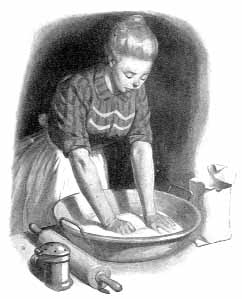
The bakers in Rome at period 168 BC enjoyed special privileges: they were the only craftsmen who were freemen of the city, all other trades being conducted by slaves.

The Greeks and Romans liked their bread white; color was one of the main tests for quality at the time of Pliny (AD 70). Those who think the craze for white bread is a modern fad should note this. Pliny wrote, "The wheat of Cyprus is swarthy and produces a dark bread, for which reason it is generally mixed with the white wheat of Alexandria". Plato (c. 400 BC) pictured the ideal state where men lived to a healthy old age on wholemeal bread ground from local wheat. Socrates, however, suggested that this proposal meant the whole population would be living on pig-food. In those days, there were certain bakers who kneaded the meal with seawater to save the price of salt. Pliny did not approve of this.

The Romans enjoyed several kinds of bread, with interesting names. There was oyster bread (to be eaten with oysters); 'artolaganus' or cakebread; 'speusticus' or 'hurry bread'. There was oven bread, tin bread, and Parthian bread. There were rich breads made with milk, eggs and butter, but these of course, were only for the wealthy and privileged people. The Egyptian grammarian and philosopher Athenaeus, who lived in the third century AD, has handed down to us considerable knowledge about bread and baking in those days.

He wrote that the best bakers were from Phoenicia or Lydia, and the best bread-makers from Cappadocia. He gives us a list of the sorts of bread common in his time-leavened and unleavened loaves; loaves made from the best wheat flour; loaves made from groats, or rye, and some from acorns and millet. There were lovely crusty loaves too, and loaves baked on a hearth. Bakers made bread mixed with cheese, but the favorite of the rich was always white bread made from wheat. In ancient Greece, keen rivalry existed between cities as to which produced the best bread.
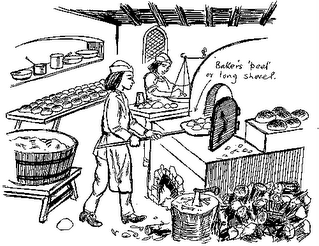
In early English historical times, there were constantly recurring periods of famine, due to not enough, or too much rain, or frosts, and other natural causes. The ruling classes, knowing that rebellion often followed famine, did their utmost to keep the price of bread from rising too high. Laws regulating its price were passed during the reign of King John (1202). Not only did the law fix the price, but also it strictly allocated that price between cost of material and an allowance for necessary charges to the baker.
Food History

THE MOST POPULAR POSTS