Showing posts with label bread. Show all posts

Sunday, November 03, 2024

Evolution of Bread in England: A Journey Through Social and Cultural Change

The history of bread in England is a compelling narrative that traces the evolution of society itself. From ancient times, bread has been a crucial part of English life, symbolizing sustenance, community, and social status. Early bread-making techniques relied on stone-ground grains, typically wheat, though scarcity often forced people to use barley, rye, and oats, which were more abundant but less refined.

During the medieval era, bread was a primary dietary staple across social classes. Yet, the type of bread consumed became a marker of social status. The wealthy enjoyed “manchet,” a fine, white bread made from sieved wheat flour, representing purity and refinement. The lower classes, however, relied on “maslin” bread, a coarser, darker loaf made from a mix of grains. Despite being less refined, maslin was more nutritious, offering essential fiber and nutrients that white bread lacked, underscoring the ironic health benefits that came with economic necessity.

The “Assize of Bread and Ale,” introduced in 1266, marked a turning point in English bread history. This law, enacted by King Henry III, regulated the price, weight, and quality of bread, protecting consumers from unfair practices in a society where bread was vital to daily sustenance. Bakers found violating these regulations faced penalties, including fines, pillorying, or even imprisonment, underscoring the social importance of bread and its regulation.

The Industrial Revolution dramatically reshaped English bread production. Innovations in milling and baking made mass production possible, and the invention of chemical leavening agents like baking powder led to faster, cheaper bread production. The accessibility of bread skyrocketed, with working-class households now able to afford white bread, once a luxury. However, mass production also led to the loss of traditional bread-making skills, as factory-made loaves began replacing artisanal bread.

Today, bread retains a central place in English cuisine, reflecting both a return to traditional methods and the innovations of the industrial age. Artisanal breads, often handmade and using local, heritage grains, coexist with the mass-produced, commercially available loaves in supermarkets. This resurgence in artisanal bread-making not only celebrates England’s culinary heritage but also reflects modern values of sustainability, nutrition, and craftsmanship, bridging centuries of bread-making history with contemporary tastes and concerns.
Evolution of Bread in England: A Journey Through Social and Cultural Change

Wednesday, October 30, 2024

Bread and Society in Ancient Rome: Culture, Class, and Craftsmanship

In ancient Rome around 168 BC, bakers enjoyed a privileged status as they were among the few freemen craftsmen, a distinction largely unavailable to others, as most trades were dominated by slaves. Breadmaking was both an art and a science, and Roman society held bread in high regard, associating it with culture and quality of life. This unique standing of bakers highlights the significance of bread in Roman culture.

The Greeks and Romans were particular about bread quality, preferring a pure white color, which they equated with high quality. By the time of Pliny the Elder in AD 70, white bread was considered superior, reflecting the prevalent taste of the period. This preference for whiteness was not just an aesthetic choice; it also served as a measure of the milling process and flour purity. Pliny noted the inferiority of the dark bread made from Cypriot wheat, which lacked the appeal of the lighter, more desirable wheat from Alexandria. This inclination toward white bread shows that the preference for whiteness in bread has ancient roots, contrary to the belief that it is a modern trend.

Interestingly, the philosopher Plato, around 400 BC, envisioned an ideal society in which citizens would thrive on wholemeal bread made from local wheat, emphasizing nutrition over visual appeal. This vision, however, was critiqued by Socrates, who disparagingly compared it to animal feed, illustrating an early divide in preferences between refined and wholegrain breads.

Breadmaking techniques in ancient times were diverse, with some bakers even using seawater in the dough to economize on salt—a practice disapproved by Pliny for compromising quality. The Romans had a variety of breads suited to different tastes and occasions, reflecting both creativity and social hierarchy. Oyster bread complemented seafood, while “artolaganus” was a type of sweet cakebread, and “speusticus,” or “hurry bread,” was quickly made for those with little time. Additionally, there were distinctions in bread based on baking methods: oven bread, tin bread, and Parthian bread each offered unique flavors and textures.

For the elite, luxurious breads made with milk, eggs, and butter were popular, symbolizing wealth and privilege. These varieties reflect the importance of bread in Roman life, not only as sustenance but also as a marker of status and identity. In sum, bread held a cultural and social significance in ancient times, embodying both the tastes and social divisions of the day.
Bread and Society in Ancient Rome: Culture, Class, and Craftsmanship

Monday, August 26, 2024

The Timeless Role of Bread in Human Civilization

Bread, one of the oldest and most significant baked goods, has been a crucial part of human diets for thousands of years. Made from a variety of grains like wheat, corn, rye, rice, barley, oats, and even buckwheat, bread in its many forms has served as a staple food since ancient times.

Archaeological findings reveal that wheat was stored in human settlements as far back as 8,000 years ago. Both the ancient Greeks and Romans viewed bread as a fundamental food, engaging in early debates over the merits of white versus brown bread. Even earlier, during the Stone Age, people crafted dense cakes from barley and wheat ground with stones. A millstone, dating back 7,500 years, has been discovered, underscoring the deep-rooted history of bread-making.

The cultivation of cereals may have been a key factor in the shift from nomadic lifestyles to settled communities. When early humans discovered that certain foods could be stored through the winter and harvested in the summer, it marked a turning point in the development of civilization. This dependable food supply allowed people to develop skills beyond hunting, fishing, and herding.

Today, bread remains a global dietary staple. Modern baking innovations and the introduction of diverse grains and ingredients have expanded the variety of bread available, catering to different tastes and nutritional preferences. The popularity of whole grain and gluten-free options reflects a growing awareness of health, while the revival of artisanal bread-making highlights a renewed appreciation for traditional methods and quality ingredients.

Bread's lasting importance stems from its adaptability and cultural significance. It is more than just a food; it represents sustenance and community. From ancient civilizations to the present, bread has remained an essential part of human life, mirroring our collective history and evolving culinary traditions.
The Timeless Role of Bread in Human Civilization

Thursday, January 04, 2024

Egyptian Bread and Cakes

The Egyptians grew a variety of crops, including grains, vegetables, and fruits, for consumption. However, their main focus in terms of diet revolved around essential crops, particularly barley, along with significant grains like einkorn wheat and emmer wheat, primarily used for making bread.

It is suggested that the Egyptians learned the art of baking from the Babylonians. In their bread-making process, the Ancient Egyptians incorporated yeast, a skill initially developed for brewing beer. They maintained reserves of sourdough, a basic mixture of beneficial fermentation organisms, using portions of it to inoculate fresh doughs.

After harvesting the grain, ancient Egyptians used grinding stones to transform it into flour. This coarse flour was mixed with water and kneaded to create bread dough.

Egyptian cooks sometimes prepared bread in large bowls on the ground, where they would physically knead the dough with their feet. The shaped dough was then either formed into loaves or placed into cone-shaped molds and baked over an open fire.

The Egyptians were innovators in the development of ovens. The earliest examples were cylindrical vessels made from baked Nile clay, featuring a tapered top to create a cone shape and an internal horizontal shelf-like partition.

Due to their fondness for sweet flavors, ancient Egyptians used flour to make cakes. With the absence of sugar, they turned to honey, dates, and fruit juice as sweeteners. The initial cakes likely originated in ancient Egypt, with yeast contributing to their light and fluffy texture. Honey served as both a sweetener and a topping, while nuts and spices were added for extra flavor. In some cases, cakes were decorated with honey or syrup icing.
Egyptian Bread and Cakes

Saturday, August 19, 2023

Pita Bread Origins

Pita bread, an essential element of Middle Eastern and Mediterranean cuisine for approximately four millennia, is recognized by various names such as Pitta breads, Arabic bread, balady, shamy, Syrian bread, and pocket bread. These round, leavened, double-layered flatbreads originated in the Middle East.

Around 14,500 years ago during the Stone Age, there is evidence suggesting that the Natufian people in what is now Jordan produced flatbread from untamed cereal grains.

By 4,000 years ago, bread held significant cultural significance in societies like the Babylonian culture of Mesopotamia. This is where the earliest recorded documents and recipes for bread-making surfaced. Bread resembling pita, cooked in a tinûru (also referred to as tannur or tandoor), played a fundamental role in the diet, closely resembling today's tandoor bread, taboon bread, and Iraqi "laffa" flatbread.

The term "pita," which essentially translates to "flatbread," was introduced by the Greeks. Its global diffusion was facilitated by the Bedouins, harking back to the origins and utility of pita bread. Bedouins engaged in exchanging pita for essential goods, contributing to its popularity as a trade item in markets.

In contemporary times, pita can be made using a conventional indoor oven at high temperatures. Modern recipes often incorporate active baker's yeast, salt, and sometimes a small quantity of sugar to feed the yeast.

Two distinct variations of pita exist: the pocket style, often filled with meats, vegetables, or falafels to form a sandwich, is crafted by placing thin dough over a convex surface above an open fire. The intense heat causes the dough to puff up as it cooks, resulting in two separate layers upon deflation. These can be seasoned and fried again to create crispy chips.

The thicker Greek-style pita, with a single layer, serves as a tool for scooping and relishing an array of classic Middle Eastern dishes, including hummus and baba ghanouj.
Pita Bread Origins

Wednesday, July 26, 2023

Origin of Naan bread

Naan, a traditional bread, is made by baking it in a tandoor oven and crafted from a mixture of flour, yeast, sugar, salt, ghee, water, and yogurt.

The first known reference to Naan dates back to 1300 AC when the Indian poet and musician Amir Khusrow mentioned it, but its origins likely go even further back, possibly to the time when yeast was introduced to India from Egypt.

During India's Mughal era in the 1520s, Naan held a special status as a delicacy exclusively enjoyed by nobles and royal families due to the limited number of skilled individuals who could make it.

The name "Naan" is derived from the Persian word "nān," which simply means bread. In Iran, it serves as a general term for any type of bread. Similarly, other languages like Turkish, Uzbek, Uyghur, and Kazakh use variations of 'nan' to refer to flatbreads, showcasing the striking similarities across regions.

Throughout history, Naan has been traditionally cooked in a hot tandoor oven, either in the ground or with hot wood charcoal, producing temperatures as high as 900°F (480°C). The dough is shaped into a ball and then slapped onto the interior walls of the tandoor, a clay oven.

The Naan bread served in Indian restaurants worldwide likely originates from the culinary traditions of both India and Pakistan.

Over the centuries, Naan has spread to various regions, including Myanmar, Afghanistan, Uzbekistan, Tajikistan, Iran, and the Chinese region of Xinjiang. As people migrated, Naan also found its way to the Persian Gulf.

In the early 1800s, an English historian and clergyman named William Tooke mentioned Naan in his logs and later incorporated it into his etymological Encyclopedia of Russia. His work introduced the recipe and tradition of Naan bread to the Western world, where it continues to be a cherished part of Indian cuisine.
Origin of Naan bread

Monday, October 07, 2019

History of Saccharomyces cerevisiae

Saccharomyces cerevisiae has been widely used by humans for thousands of years and is arguably one of the most important microbial species in human history. Archaeologists have found evidence for the production of a fermented beverage in China at 7000 BC, and of wine in Iran and Egypt at 6000 BC and 3000 BC.

Archaeological evidence of brewing activity was found on Sumerian tablets dating to about 1800 BC although the origins may well go back to around 10 000 years ago. The text found on these tablets sings the praises of the Sumerian goddess of brewing in the ‘Hymn to Ninkasi’. Since that time, mankind has discovered that the goddess that caused the ‘magic’ is in fact the living organism, yeast. Ancient brewers domesticated yeast due to selection of the best fermentation agent.

Saccharomyces cerevisiae is a robust yeast that is capable of withstanding stressful conditions and has a high fermentation efficiency, rapid growth, effective sugar use, the ability to produce and consume ethanol, tolerance of high ethanol concentrations and low levels of oxygen, osmotolerance, thermotolerance, and cell activity in acidic environments, which are fundamental to its industrial use-fullness.

The genus and species names, Saccharomyces cerevisiae, also can be traced to earlier origins. Saccharomyces means sugar mold or fungus and cerevisiae has its origin in the Gaelic word kerevigia and the old French word cervoise.

Antonie van Leeuwenhoek described yeast in 1680 with the aid of handmade wax globules, whereas Charles Cagniard de la Tour reported in 1838 that yeast was responsible for alcoholic fermentation. By the end of the 19th century, improved strains were selected by the use of pure culture technique.

Whilst it is also useful for raising bread, producing fuel, and expressing desirable engineered proteins, it was the demand for alcoholic beverages that motivated the scientific study of yeast by Pasteur (1897) and the Carlsberg Research Laboratories (1896). Since then Saccharomyces cerevisiae has achieved a second distinction: it is the best understood genetic model organism. Saccharomyces cerevisiae was the first eukaryote to have its genome completely sequenced.
Saccharomyces cerevisiae

Wednesday, October 03, 2018

Wheat history in ancient Greece

Wheat as a staple food was cultivated in ancient Greece in prehistoric times. Cultivation of wheat began to spread beyond the Fertile Crescent after about 8000 BC. Jared Diamond in his excellent book, “Guns Germs and Steel”, traces the spread of cultivated emmer wheat starting in the “Fertile Crescent” about 8500 BC, reaching Greece by 6500 BC, Egypt shortly thereafter, followed by introductions in Germany and Spain by 5000 BC.

Cereals, vine, and oil were the basic agricultural products in ancient Greece like in the entire Mediterranean region. The choice to cultivate depended first on environmental conditions. Wheat was one of the main cereal crops in ancient Greek agriculture.

The coastal lowlands were very attractive for ancient people thus most of the human settlements had been established in such areas. Mild winters and hot summers are the characteristics of the coastal lowlands of the Greece. This type of climate is very advantageous for some annual crops like wheat and for some perennial crops like olive.

Bread made from wheat was eaten, and flour was sold in the markets of Athens and elsewhere. Grain from the Greek colonies in southern Italy was shipped to Athens through the port of Piraeus and ground into particularly soft white flour. In ancient Greece, a keen rivalry existed between cities as to which produce the best bread.

The Greeks planted “naked wheat,” an evolved variety whose grain could be easily separated from the hulls when threshed. Until the Greeks arrived, the Egyptians used only Triticum turgidum of the dicoccum variety, which require more labor to arrive at the same result.
Wheat history in ancient Greece

Wednesday, August 17, 2016

History of chapati

The earliest breads were flat, more like crackers. Some examples that still exist are Indian chapati. Flat breads have been known to humans for over the last 6000 years.

A type of flour used nowadays for making chapatis, a type of Indian flat bread that may be similar to certain ancient flat breads. Babylon is the oldest to have a baker’s oven in the world in 4000 BC.

In the old kingdom of Egypt, as long as 2500 BC, hot ashes or heated stone labs were used to bake flat bread. Ancient Egyptians and Greeks used to eat flat bread topped with olive oil and other things.

Flat bread of chapati
Bread occupied an important place in Roman culture and religion; therefore, large commercial bakeries were developed in the second century BC to meet the demand s increasing bread consumption.

The ancient flat bread, known as chapati, is still the primary grain served with meals in North India. Abu’l-Fazi inb Mubarak, vizier of Mughal Emperor Akbar, has also mentioned chapati in his book ‘Ain-i-Akbari’ in the 16 century.
History of chapati

Tuesday, April 07, 2015

History of croissant

Croissant a French word meaning crescent or crescent shaped is the name traditionally given to a buttery breakfast roll or bread popular in France.

The most frequently repeat legend attributed to the invention of the croissant to Viennese baker to commemorate the Austrian victory over the Turks in 1683.

A century later, following the marriage to the Austrian princess Marie Antoinette to the future French King Louis XVI, the croissant began to be made at the Court of Versailles.

The croissant appears to have been launched in Paris between 1837 and 1839 by the Viennese baker August Zang. American British writer, Henry James (1843-1916), recalling his childhood years in Paris under the Second Empire, speaks of the ‘so softly crusty crescent rolls’.

The croissant was known early to travelers as one of the pleasures of France.

The earliest French reference to the croissant seems to be in Payen’s book Des substances alimentaires published in 1853.

He cites, among the Pain dits de fantasie ou de luxe, not only English ‘muffins’ but ‘les croissants’.

Although the fashion for these pastries spread quickly, the first recognizable recipe for a croissant did not appear until the beginning of the twentieth century.
History of croissant

Wednesday, November 12, 2014

Bread in the Roman Empire

In the early days of Rome, most people made their bread from grain they produced.

In the later times in the Roman Empire, bread replaced porridge as the most important part of the Roman diet. Bread was the food of ‘citizens’ of Rome, a status commonly achieved by successful military service.

The ancient Roman bread was a flat, hard cake called ‘libum’ which was baked in hot embers and ashes and which continued in favor even when wheat-bread and leaven was introduced.

In later days of the Roman Empire, bread was distributed as a right to the citizens of Rome.

The professional baker appears around 174 BC and by that time throughout the Empire most middle and lower class Romans relied upon commercial bakeries for their bread. Also, Rome began to important grain from territories in its empire because Rome could not produce enough grain for its growing population.

Rome politicians used bread from the centralized bakeries as political capital to buy votes of the plebeians.

According to Pliny the Elder and Seneca that the poor ate inferior kinds of bread, while the rich consumed bread of the finest quality. The poorer citizens would have to grind their own corn, preferred wheat meal porridge or groats to bread.

In Roman Palestine, the poor often ate nothing but cheap bread. For them bread seems to have been more important than gruel or porridge.

In fact, both cereal products were often eaten in combination, i.e. gruel was scooped out of the pot with a piece of bread.

Romans in Gauls (modern French) discovered that adding the froth from beer to bread dough made especially light, well leavened bread. This is the beginning of the use of a controlled yeast source for making bread doughs.
Bread in the Roman Empire

Sunday, November 09, 2014

Bread in ancient Greek

Greeks have three basic ingredients that have throughout history been used in their cuisine: bread, wine and olive oil.

Bread is a fundamental part of Greek life – it appears in some form at very meal and special festive breads are of great significant in religious festivals and family celebrations.

The first description of bread is found in Athenaeus’ (170 – 230 AD) food related text Deipnosophistae. The book is built out of a series of dialogues between diners.

Greek bakeries, piled high with breads of every conceivable size and shape, have a special magic. It is the companion to every food. Greeks often eat bread for breakfast with some cheese.

Different varieties of bread are used, such xoriatiko, lefko, polisporo, mavro and so on.

Poor people supplemented bread loaf with little more than fruit, mushrooms and vegetables gathered from the wild. On the tables of the wealthy the variety of fish and meat dishes and the many savory and sweet confections were still typically preceded by wheat and barley loaves.

In rural communities bread is still baked in fournos and the village baker supplies a range of breads, from the basic everyday loaf to wonderful crusty wholemeal, barley or stone ground breads.

The ancient Greeks did not use knifes or forks, eating primarily with their finger. They did occasionally use a spoon or piece of hollowed-out bread for eating soups and other liquids.

They also used pieces of bread to wipe their hands after eating and the bread was then given to dogs.
Bread in ancient Greek

Friday, October 04, 2013

Ancient history of bread

Bread has been an integral part of human history from the family ritual of breaking bread together to the tumultuous revolution ringing with cry for loaves. Bread began as a lumpy, oatmeal-like substance. It was a cried mixture of ground grain and water.

Archeological evidence from Italy, Russia, and the Czech Republic suggest that people were grinding plants into flour to make crude flat breads as early as 28000 BC.

Bakers built the first crude ovens in the Ukraine around 25000 BC; the first grain growers cultivated seed-bearing plants starting around 10,000 BC.

By 11,000 BC, emmer and einkorn wheat along with barley were cultivated across Mesopotamia.

In the Bronze Age, bread baking required a cast-iron or clay sac, or sheet, that went into the heat with an iron cloche perched like a bell jar over the loaves.

In Pharaonic Egypt state workers received wages in bread and bread grains, and soldiers were known for eating so much bread – a ration of four pounds per day.

The first Greek breads were cooked in the embers or under a dome shaped bell, but then Greeks invented the true oven, which could be pre-heated and opened at the front.

From the time of Pericles onwards the art of the Greeks bakers lay not only in the mixing of various kinds of bread dough, but above all in the different shapes of the loaves they made.

Rome was no different, building its vast imperial reach on a foundation of sophisticated bakeries and highly developed bread distribution system.

After the Anglo-Saxons supplanted the Romans conquerors of the British Isles, cooks relied in bread as part of the dietary triangle, the other points of which were roasted meats and dairy items and mead.
Ancient history of bread

Tuesday, November 27, 2012

Bread during ancient Roman

In the early days of Roman Republic, most people made their own bread from the grain they produce. Grains were significant part of the Roman diet, depending on where they lived, Romans might eat emmer, bread wheat, spelt, barley, oats, rye and millet, although emmer and bread wheat were preferred.

The woman of the household had to grind out flour. They did it very simply, by spreading wheat grains on a large flat or slightly concave stone and rubbing them over with a smaller stone which might either be round, or long and narrow like a roller.

The ancient Roman bread was a flat, hard cake called ‘libum’ which was baked in hot embers and ashes and which continued in favor even when wheat bread and leaven was introduced.

Roman’s people breakfast is usually simple bread dipped in watered-down wine. Sometimes a little honey is used, and perhaps a few dates or olives might be added. For lunch is a similar meal of bread, or leftover form the previous day’s main meal.

The professional baker appears around 174 BC. Barley bread was then only eaten by slave and gladiators, the coarse flans were soaped in milk before eating. Before the arrivals of professional bakers, Romans either ate porridge or made their own bread.

During the later Republic and throughout the Empire most middle and lower class Romans relied upon commercial bakeries for their bread.

Also Rome began to import grain from territories in its empire because Rome could not produce enough grain for its growing population.

The public bakeries were numerous, the majority of them being conducted in the reign of Augustus. In the 4th century, the regionary catalogues record around two hundred and fifty bakeries in Rome with an average of fifteen to twenty in each region.
Bread during ancient Roman

Monday, November 05, 2012

History of bread during ancient Egypt

In ancient Egypt, bread was made as flat cakes from toasted grains of barley, whet or millet. Before the discovery of yeast all breads were unleavened. This was a type for bread which dates back to Neolithic times, which began in approximately 8000 to 10000 BC.

Ancient Egypt is where bread really began to take shape as the yeasty food people enjoy today.

The wheat produced in abundance in Egypt was the staple food for most people. Bakers and servants turned ground wheat into 40 different types of bread, cakes, roils and pastries.

The dough was left overnight to sour and then baked into round, triangular, oval and other shapes. Some loaves were cone-shaped, made of slices placed vertically and used for presenting to the dead. Bread was considered an essential item to be buried with deceased for the afterlife.

Bread was also baked in clay pots or molds, some of which were greased and reused, whole others were crudely modeled around conical wooden forms and broken to free the loaf after baking.

Bread was consumed in great quantities throughout the country, from the lowest worker who might be paid in bread, to the pharaoh and his family.
History of bread during ancient Egypt

Friday, August 12, 2011

History of azyme

The unleavened bread that Jews eat at Passover is called the azyme; in contrast the leavened bread that members of the Greek Orthodox Church eat at communion is called the enzyme.

Pasche is the feast of azyme, the bread of proposition while Passover, the feast of sweet bread (or unleavened bread).

The use of azyme bread seems to have begun, almost insensibly, from the frequent inter-communion between Italo-Greeks and their Roman neighbors.

For the Greeks, the use of unleavened bread was a Jewish practice, contrary to the Gospel, heretical and vain. The Greeks maintained that the leavened bread symbolized the animated body of Christ.

Byzantine polemicist argued that using unleavened bread was itself a ‘Judaizing’ practice, indicating a lack of recognition that the New Testament had. In 1051, when the Jews of Bari revolted, the Christian citizens of the town retaliated by burning down the Jewish quarter because Byzantine associated unleavened bread with the Jewish commemoration of Passover.

The word azyme appearing briefly in English language in the fourteenth century and then vanishing until the sixteenth century.

At the end of nineteenth century biochemists gave new life to this term when they gave the name enzyme to proteins that cause biochemical reactions similar to those produced by leavening agents.
History of azyme

Sunday, June 27, 2010

The Legends of Anadama Bread

The Legends of Anadama Bread
This yeast bread made with cornmeal and molasses originated on the North Shore of Boston.

The Cape Ann town of Rockport and Gloucester are among those that claim to have invented it.

According to competing popular legends a farmer or a local fisherman grew tired of eating the cornmeal and molasses porridge that his wife incessantly prepared for him.

He dumped flour and yeast into the bowl and threw it in the oven, grumbling, “Anna, damn her!” Others say it was Anna who got so fed up with her husband that she left him returning home, her distraught husband threw random ingredients into her unfinished cornbread, muttering, “Anna, damn her!”

More appreciate versions claim than Anna’s spouse pronounced his defining epithet with pride as he munched thick slices of her tasty bread or that Anna’s tombstone fondly read, “Anna was a lovely bride, but Anna, damn ‘er, up and died.”

The bread is also known as amadama bread allegedly derived from the irate husband who cried, “Where am’er, damn’er?” when his wife was away.

These stories traceable in written for only to the nineteenth century, are repeated by local restaurant and bakeries that serve anadama bread. The bread’s varying legends reveal a simple, home-cooked regional food.

Whether created by a colonial settler who added flavorful indigenous ingredients to an English yeasts bread or by a post Revolutionary housewife, in a community whose cuisine harked back to seventeenth century English cooking anadama bread embodies the fierce local pride and deep English roots of the North Shore of Boston.
The Legends of Anadama Bread

Thursday, December 24, 2009

History of Bread Baking

History of Bread Baking
Bread has been an important staple since Stone Age Farmers created the first flat bread.

A rough porridge was mixed together and spread thinly over hot stones to form soft pancake-like bread.

It is truly amazing feat that the connection was made between wheat, water and sunshine to give us this most enduring of foods.

The next step forward was achieved 5,000 years ago in the Bronze Age, when it was discovered that inverting a pot over hot stones forms a primitive but effective oven.

But the honor of mastering the art of yeast fermentation goes to the ancient Egyptians, who observed that of dough was left out in the open for a few hours it would often bubble and smell a little sour.

If the sour dough was baked, the resulting bread had a lighter texture and a pleasant yeasty flavour.

The down side to this discovery was that it relied on airborne yeast particles, which made it completely unreliable.

To overcome this, the Egyptians would simply save a piece of fermented dough from a previous successful batch and mix it into the new dough.

Bread has always played rather a telling role in Europe’s social history – the bread in the hands would always reveal the rank.

Made from refined flour, white bread was regarded as infinitely superior and therefore only suitable for the upper classes.

These days, or course, the reverse is true.

Dense, wholegrain breads are now thought to be healthy, more nourishing option and priced accordingly.

It is indeed ironic that people will pay a comparatively large sum of money for something that was once considered the bread of paupers.
History of Bread Baking

Wednesday, July 09, 2008

Grain in Ancient Egypt 1300 BC

Grain in Ancient Egypt 1300 BC
The wheat that Egyptian grew in such quantity was made into about 40 different sorts of bread, pastry, cakes and biscuits, but grinding the grain was very hard work. It was usually done by woman using two stones, and as it was done in the open air, grit and other foreign bodies found their way into the flour. These impurities caused extensive wear on the teeth, and Egyptians often suffered from both tooth infections and abscesses.

The Egyptians’ bread dough was made from flour and water – but without yeasts, so the bread did not rise. It was cooked as flat loaves or in moulds and different flavorings could be added, such as honey, milk, eggs, fruit, butter and herbs.

Barley was the other major grain crop, and the Ancient Egyptians used it to make the beer that every one drank everyday - even the gods. The brew had an alcohol content of about 8 per percent. To make it, the Egyptians first moistened barley with water, and left it to stand. Then they mixed the moist grains with lightly baked barley loaves in a large jar, poured on more water and let the mixture ferment. When the beer was ready it was very thick and had to be strained before drinking.
Grain in Ancient Egypt 1300 BC

Sunday, January 28, 2007

History of Bread

Food History
Bread is the oldest and most important baked product. It has been made from many of the grains, including wheat, corn, rye, rice, barley, oats and even buckwheat. Bread, in one form or another, has been one of the principal forms of food for man from earliest times.
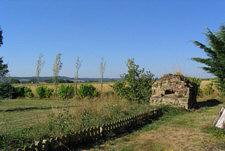
Wheat has been found in pits where human settlements flourished 8,000 years ago. The ancient Greeks and Romans knew bread for a staple food even in those days people argued whether white or brown bread was best.

Further back, in the Stone Age, people made solid cakes from stone-crushed barley and wheat. A millstone used for grinding corn has been found, that is thought to be 7,500 years old. The ability to sow and reap cereals may be one of the chief causes, which led man to dwell in communities, rather than to live a wandering life hunting and herding cattle.

When ancient man discovered a food that would keep through the winter months, and could be multiplied in the summer, it could be said that civilization began. He might have a reasonably safe store of food to carry him over, which would give him time to develop other useful skills besides hunting, fishing and cattle-herding.

Bread was leavened; that is, an agent in the form of a 'barm' was added to the dough that caused the mixture to rise in the shape of our familiar loaf. The hurried departure of the Israelites from Egypt, described in the Book of Exodus in the Bible, prevented their bread being leavened as usual; the Jews today commemorate this event by eating unleavened bread on special occasions.The ruins of Pompeii and other buried cities have revealed the kind of bakeries existing in those historic times. There were public bakeries where the poorer people brought their bread to be baked, or from which they could buy ready-baked bread.
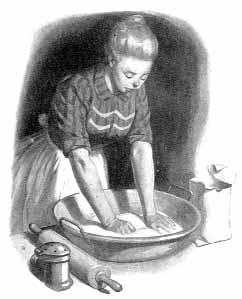
The bakers in Rome at period 168 BC enjoyed special privileges: they were the only craftsmen who were freemen of the city, all other trades being conducted by slaves.

The Greeks and Romans liked their bread white; color was one of the main tests for quality at the time of Pliny (AD 70). Those who think the craze for white bread is a modern fad should note this. Pliny wrote, "The wheat of Cyprus is swarthy and produces a dark bread, for which reason it is generally mixed with the white wheat of Alexandria". Plato (c. 400 BC) pictured the ideal state where men lived to a healthy old age on wholemeal bread ground from local wheat. Socrates, however, suggested that this proposal meant the whole population would be living on pig-food. In those days, there were certain bakers who kneaded the meal with seawater to save the price of salt. Pliny did not approve of this.

The Romans enjoyed several kinds of bread, with interesting names. There was oyster bread (to be eaten with oysters); 'artolaganus' or cakebread; 'speusticus' or 'hurry bread'. There was oven bread, tin bread, and Parthian bread. There were rich breads made with milk, eggs and butter, but these of course, were only for the wealthy and privileged people. The Egyptian grammarian and philosopher Athenaeus, who lived in the third century AD, has handed down to us considerable knowledge about bread and baking in those days.

He wrote that the best bakers were from Phoenicia or Lydia, and the best bread-makers from Cappadocia. He gives us a list of the sorts of bread common in his time-leavened and unleavened loaves; loaves made from the best wheat flour; loaves made from groats, or rye, and some from acorns and millet. There were lovely crusty loaves too, and loaves baked on a hearth. Bakers made bread mixed with cheese, but the favorite of the rich was always white bread made from wheat. In ancient Greece, keen rivalry existed between cities as to which produced the best bread.
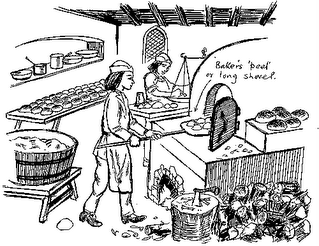
In early English historical times, there were constantly recurring periods of famine, due to not enough, or too much rain, or frosts, and other natural causes. The ruling classes, knowing that rebellion often followed famine, did their utmost to keep the price of bread from rising too high. Laws regulating its price were passed during the reign of King John (1202). Not only did the law fix the price, but also it strictly allocated that price between cost of material and an allowance for necessary charges to the baker.
Food History

THE MOST POPULAR POSTS